
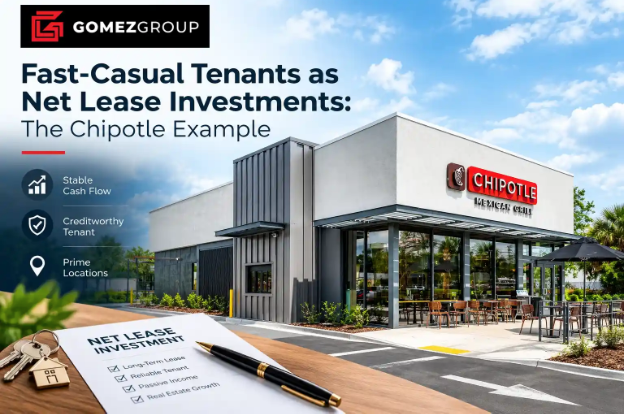
A fast-casual net lease investment can offer investors a way to own restaurant real estate while benefiting from a lease that may shift several property expenses to the tenant. The key is to look beyond the restaurant brand and understand the lease, location, income, property condition, and future risks.
Chipotle provides a useful example of how investors can approach this type of property. While a recognizable tenant can add appeal, every property still needs individual due diligence before an investor decides to move forward.
Understand What Makes Fast-Casual Properties Different
Fast-casual restaurants offer quicker service with a more customized dining experience, making well-located properties attractive in areas with strong traffic, visibility, and easy access. Nearby residential and commercial activity can also support demand.
For investors, the lease structure is equally important. A net lease may shift costs such as taxes, insurance, or maintenance to the tenant, depending on the agreement. Before investing, review the lease term, current rent, scheduled increases, renewal options, and tenant responsibilities.
Also consider the property’s condition, accessibility, surrounding market, and comparable sales. This broader review helps investors understand the property’s income potential and long-term value.
Start With the Lease, Not the Logo
A recognizable restaurant can attract attention, but the lease determines many of the property’s financial details.
A Chipotle NNN property may provide a lease structure where the tenant handles significant property expenses. However, the exact responsibilities depend on the individual agreement. Investors considering a Chipotle NNN Property for Sale should therefore review the actual lease and its amendments.
Pay close attention to:
| Lease Item | What to Check |
| Base rent | Current amount and payment schedule |
| Lease term | Years remaining |
| Escalations | When and how rent increases |
| Renewal | Options and conditions |
| Taxes | Who pays property taxes |
| Insurance | Required coverage and responsibility |
| Maintenance | Routine and major maintenance duties |
| Assignment | Rules for transferring the lease |
This review can reveal important details that may not appear in a property listing.
Study the Location From the Customer’s Perspective
Restaurant real estate depends heavily on convenience. Customers need to be able to reach the property easily, see it from nearby roads, and access parking without unnecessary difficulty.
When evaluating a location, drive around the area at different times of day if possible. Look at how traffic moves and whether nearby businesses generate additional activity.
A strong location may have:
- High visibility from major roads
- Easy entry and exit
- Convenient parking
- Growing residential areas
- Nearby offices or retail centers
- Strong traffic patterns
- Limited direct competition
These factors can help you understand the property’s broader appeal instead of focusing only on the current tenant.
Break Down the Investment Numbers
The asking price does not tell you whether a property makes financial sense. Investors should calculate the property’s income and understand the expenses attached to ownership.
Net operating income, or NOI, is commonly used to evaluate income-producing real estate. The capitalization rate compares NOI with the property’s purchase price and can help when comparing similar properties.
Still, one number should never replace a complete analysis.
Consider how these factors affect the numbers:
- Income: Current rent and future contractual increases.
- Expenses: Costs that remain with the owner after tenant obligations are considered.
- Price: What you are paying relative to the property’s income.
- Lease: How long the current income is contractually supported.
- Market: How the property compares with similar assets nearby.
This approach gives investors a clearer picture of the property’s potential financial performance.
Look at the Property Beyond Its Current Tenant
The tenant is important, but the underlying real estate also matters.
Consider what would happen if the current restaurant eventually moved out. Would the building still be useful to another restaurant? Could another business use the site? Does the location have characteristics that make it attractive to future tenants?
This matters when evaluating fast casual restaurant real estate because restaurant buildings can have specialized layouts and equipment.
Think about:
- Building size and layout
- Parking capacity
- Drive-thru availability
- Road frontage
- Signage opportunities
- Utility capacity
- Kitchen infrastructure
- Overall site accessibility
The more useful the property is beyond its current lease, the easier it may be to understand its long-term real estate value.
Check the Building Before You Commit
A net lease does not eliminate physical property risks. Since the owner still owns the building and land, inspect the property’s condition before closing. Restaurant properties may have heavy equipment, specialized plumbing, HVAC systems, parking areas, and other components that need maintenance or replacement.
A professional inspection should check the roof, HVAC, electrical and plumbing systems, parking lot, exterior structure, drainage, and interior improvements. Afterward, compare the findings with the lease to confirm which repairs are the tenant’s responsibility and which may remain with the owner.
Review the Lease Timeline
The amount of time remaining on a lease can significantly affect how investors view the property.
A long remaining term can provide greater visibility into contractual rental income, while an approaching expiration may require more attention to renewal provisions and future leasing risk.
Create a simple timeline showing:
- Current lease expiration
- Scheduled rent increases
- Renewal option dates
- Notice deadlines
- Any termination provisions
- Important assignment dates
If you plan to buy a Chipotle net lease property, this timeline should be part of your due diligence before submitting an offer.
It helps you understand not just today’s income, but how the lease could develop over the coming years.
Consider What Happens When the Lease Ends
Every lease eventually reaches an expiration date. Investors should consider the property’s position at that point rather than focusing only on current rent.
Ask whether the existing tenant has renewal options and whether those options have specific conditions. Also consider the property’s potential appeal to another operator if the tenant does not renew.
A NNN restaurant property can have value based on both its existing lease and the underlying site.
Factors such as location, building design, parking, visibility, and nearby development can influence future tenant demand.
This is why the investment should be analyzed as real estate first and as a tenant relationship second.
Factor Financing Into Your Calculations
Financing can significantly affect a property’s cash flow and the amount of capital you need upfront. Before buying, consider the purchase price, down payment, loan amount, interest rate, annual rental income, owner-paid expenses, closing costs, expected capital expenditures, and other financing costs.
Creating a simple financial model can help you understand the property’s overall cash flow and investment requirements. Also, do not assume a triple-net structure eliminates all owner expenses.
Review the lease carefully to confirm which costs are covered by the tenant and which responsibilities remain with the property owner.
Complete Due Diligence Before Closing
Once the property appears financially suitable, move into detailed due diligence.
Collect the documents that support the property’s income, ownership, condition, and legal status. If information in the marketing materials differs from the actual documents, resolve the difference before proceeding.
Your due-diligence file should generally include:
- Complete lease and amendments
- Rent statements
- Property tax records
- Insurance information
- Operating statements
- Inspection reports
- Title documents
- Survey
- Environmental information
- Comparable property data
If lease terms require clarification or changes, professional support during commercial lease negotiation can help ensure the final agreement matches the intended arrangement.
Compare the Property With Similar Investments
No investment should be evaluated in isolation. Compare the opportunity with similar net lease properties in the same or comparable markets.
Look at differences in:
- Purchase price
- Cap rate
- Lease term
- Rent increases
- Tenant quality
- Location
- Property condition
- Remaining owner responsibilities
Gomez Group can help investors look at the broader commercial real estate picture and understand the details behind a potential acquisition.
The comparison should focus on facts and assumptions that can be verified rather than simply choosing the property with the most recognizable tenant.
Make the Decision With the Full Picture
A recognizable fast-casual tenant can be appealing, but the brand should not be the only consideration. Review the lease, location, property condition, financials, and future marketability before investing.
Gomez Group helps investors understand the real estate behind the lease and evaluate each opportunity using complete property information. A fast casual net lease investment should align with the property’s income, market conditions, and long-term investment goals.
FAQs:
1. What is a net lease restaurant property?
It is a restaurant property where the lease may require the tenant to pay some or many property-related expenses in addition to rent. The exact responsibilities depend on the lease agreement.
2. Why is the lease important when buying a Chipotle property?
The lease determines the current rent, remaining term, rent increases, renewal options, and expense responsibilities. These details directly affect how the property should be analyzed.
3. What should investors inspect in a restaurant property?
Investors should review major building systems, including the roof, HVAC, electrical, plumbing, parking lot, drainage, and structural components. Lease responsibilities should also be checked against inspection findings.
4. Does a recognizable restaurant guarantee strong investment performance?
No. The tenant’s reputation is only one consideration. Location, lease terms, purchase price, property condition, market conditions, and future leasing prospects also matter.
5. What documents should be reviewed before buying a net lease property?
Investors should generally review the complete lease, amendments, rent records, tax information, insurance documents, inspection reports, title documents, survey, environmental information, and comparable sales.