
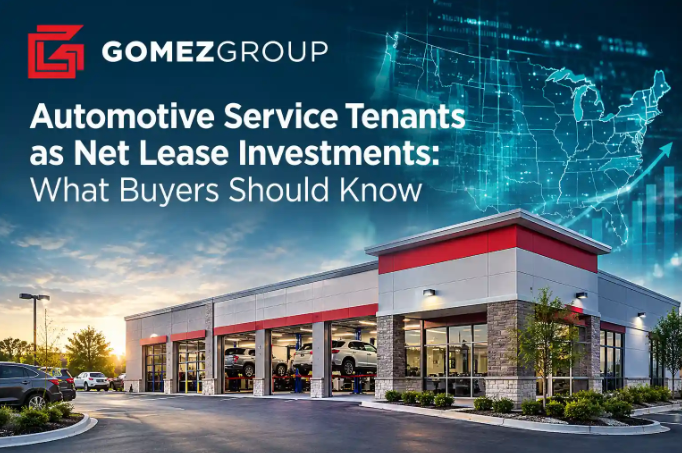
Buying a property leased to an automotive service business can provide rental income, but the deal needs careful review. A successful automotive net lease investment depends on understanding the lease, the tenant’s business needs, and the property’s value beyond its current use.
Before buying, investors should look at what could affect rental income today and what might happen if the tenant leaves in the future.
Identify What Makes the Property Valuable
An automotive service property is more than a building with a recognizable business name. Its value may depend on how easily customers can reach it, how well the site supports vehicle movement, and whether other operators could use it.
When reviewing retail investment properties, consider the features that make a location useful to businesses and customers.
Check these three areas before making an offer:
- Access: Can drivers enter and exit without difficulty?
- Layout: Is there enough room for service bays, parking, and vehicle movement?
- Local demand: Are there enough potential customers to support automotive services in the area?
For an auto service property for sale, also check local zoning and whether the existing setup would suit another operator. A useful site can retain value even when its current tenant changes.
Read the Lease With the Expiration Date in Mind
A lease may provide rental income for several years, but buyers should know exactly what happens when that agreement ends.
Rather than looking only at the remaining lease term, review the renewal and termination clauses. These provisions can affect how long the tenant stays and when the owner can negotiate new terms.
Pay particular attention to:
- Renewal options: Can the tenant extend the lease without the owner’s approval?
- Rent changes: Will rent increase, stay fixed, or reset to market levels?
- Early termination: Can the tenant leave before the stated expiration date?
- Notice requirements: How far in advance must the tenant communicate its decision?
A clear understanding of these terms helps buyers estimate future income and prepare for possible vacancies.
Use This Table to Review Repair Responsibilities
Automotive service buildings often contain specialized equipment and systems. Under a triple-net lease, tenants generally cover property taxes, insurance, and maintenance, but the contract determines the exact responsibilities.
| Property item | What buyers should verify |
| Roof and structure | Who pays for major repairs or replacement? |
| Parking and pavement | Is routine upkeep the tenant’s responsibility? |
| Service equipment | Does the tenant own it, and who maintains it? |
| Plumbing and drainage | Who handles repairs to service-related systems? |
| Environmental concerns | Are inspections or remediation obligations clearly assigned? |
A service tenant NNN agreement should spell out these responsibilities. If the lease is unclear, ask a qualified real estate attorney to review the relevant clauses before closing.
Confirm Who Is Actually Paying the Rent
A well-known brand may attract customers, but investors need to know which legal entity signed the lease. The tenant could be a large company, a franchisee, or an independent operator.
For example, when reviewing a Valvoline net lease investment property, do not assume that the brand’s parent company guarantees the rent.
Instead, follow this checklist:
- Identify the legal tenant named in the lease.
- Review available financial information about that business.
- Check whether a parent company or another party guarantees the lease.
- Read the guarantee to understand its scope and limitations.
- Review any available evidence of payment problems or lease disputes.
This process helps buyers understand who is responsible for rental payments if the business encounters financial difficulties.
Imagine the Property Without Its Current Tenant
What would happen if the existing operator closed or moved elsewhere? This is an important question because automotive buildings are often designed for a specific type of business.
An oil change real estate investment may include service bays, specialized equipment, vehicle lifts, and dedicated customer access. These features can help attract similar operators but may limit interest from businesses in other industries.
Consider the following alternatives:
- Another automotive operator: Could a competing service business use the existing layout?
- A different commercial tenant: Would the building need major alterations?
- A new permitted use: Does local zoning allow other businesses to operate there?
- A vacant property: How much could utilities, repairs, security, and marketing cost during the vacancy?
Estimating these possibilities before purchasing can help buyers avoid relying entirely on one tenant.
Calculate the Income Under Different Conditions
Advertised rent does not show the full investment picture. Calculate how returns could change if expenses rise, repairs are needed, or the property becomes vacant.
Example: A property generating $100,000 in annual net operating income and costing $1 million has a 10% cap rate. However, uncovered expenses or vacancy costs could reduce the actual return.
Before investing, review:
- Annual rent and scheduled increases.
- Uncovered property expenses.
- Financing and transaction costs.
- Potential vacancy and repair costs.
When comparing national net lease opportunities, use the same assumptions for each property to evaluate income potential and risk fairly.
Plan Your Exit Before Signing the Purchase Agreement
Advertised rent does not show the full investment picture. Calculate how returns could change if expenses rise, repairs are needed, or the property becomes vacant.
Example: A property generating $100,000 in annual net operating income and costing $1 million has a 10% cap rate. However, uncovered expenses or vacancy costs could reduce the actual return.
Before investing, review:
- Annual rent and scheduled increases.
- Uncovered property expenses.
- Financing and transaction costs.
- Potential vacancy and repair costs.
When comparing national net lease opportunities, use the same assumptions for each property to evaluate income potential and risk fairly.
Make a Better-Informed Investment Decision
Automotive service properties can provide rental income, but buyers need to understand the risks behind the lease and the building. Review tenant obligations, confirm financial guarantees, inspect specialized systems, and consider alternative uses before committing.
Gomez Group encourages investors to assess both current income and future flexibility when evaluating commercial real estate. A well-researched automotive net lease investment should make the expected returns, ownership responsibilities, and potential challenges clear from the start.
Frequently Asked Questions:
1. How Are Automotive Service Properties Different From Other Retail Properties?
Automotive service properties have specialized equipment and service areas that may limit their use for other businesses.
2. What Should Buyers Check Before Purchasing an Automotive NNN Property?
Buyers should review lease terms, tenant finances, repair responsibilities, property condition, and environmental risks.
3. Does a Well-Known Automotive Brand Guarantee Rental Payments?
No. Buyers should check the tenant’s financial strength and confirm whether a parent company guarantees the lease.
4. What Happens When an Automotive Service Tenant’s Lease Expires?
The owner may need to find a new tenant or adapt the property for another use, which can involve extra costs.
5. How Can Investors Compare Automotive Net Lease Properties?
Investors should compare rental income, purchase price, lease term, tenant strength, maintenance costs, and resale potential. A higher cap rate does not always mean a better investment.