
Retail real estate investors need to understand how a property’s size, tenant mix, location, and customer base affect its long-term performance. Some retail properties attract shoppers from across a large area, while others serve people living or working nearby.
Understanding the power center vs. neighborhood center difference helps investors evaluate rental income potential, tenant demand, operating costs, and investment risks.
Both formats can offer valuable opportunities, but the right choice depends on investment goals, local market conditions, and the property’s ability to attract and retain tenants.
Key Takeaways:
- Power centers generally attract shoppers from a wider area through large-format retailers.
- Neighborhood centers focus on convenience, essential goods, and recurring local visits.
- Anchor tenant strength, lease terms, and vacancy exposure influence investment performance.
- Property condition, competition, and local demographics can affect long-term income.
- Investors should compare cash flow, expenses, tenant quality, and future leasing demand before purchasing.
What Is the Difference Between Power Centers and Neighborhood Centers?
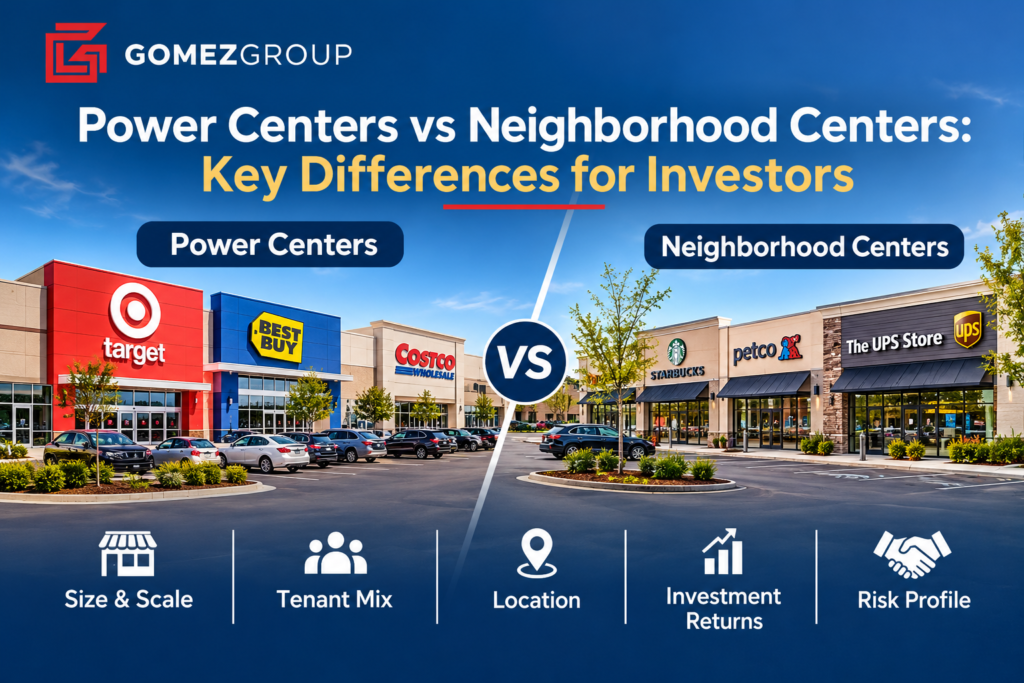
Power centers and neighborhood centers differ in size, tenants, and the customers they attract. These factors also affect their investment potential.
Power centers usually feature large retailers, including home improvement stores, discount chains, and electronics stores. They attract shoppers from several neighborhoods and rely on strong anchor tenants to support leasing demand.
In power center real estate, location and tenant performance are important factors to consider.
Neighborhood centers, on the other hand, focus on everyday needs. They may include grocery stores, pharmacies, salons, and convenience stores that serve nearby residents.
A commercial retail plaza can share features of either format, depending on its size, location, and tenant mix.
How Do Their Locations and Tenant Mixes Compare?
Location and tenant composition are important when comparing these retail formats. Investors should assess how each property fits into its surrounding market.
| Factor | Power Center | Neighborhood Center |
| Typical size | Larger retail site with multiple big-box stores | Smaller property serving a local trade area |
| Anchor tenants | Discount retailers, home improvement stores, and other large-format businesses | Grocery stores, pharmacies, and convenience retailers |
| Customer reach | Draws shoppers from a wider geographic area | Primarily serves nearby residents |
| Shopping purpose | Destination shopping and planned purchases | Everyday essentials and regular errands |
| Parking needs | Usually extensive surface parking | Parking designed for shorter local visits |
| Tenant mix | Often focused on large retail units | Usually combines essential retail and local services |
| Main leasing consideration | Anchor tenant demand and large-space availability | Local spending, tenant stability, and convenience |
These differences affect leasing strategies and the type of demand each property must maintain. Investors should also review nearby competition, road access, visibility, and population patterns before making a decision.
Which Investment Offers Better Income Potential?
The income potential of a retail center depends on rental income, tenant stability, property expenses, and market demand. Both formats have benefits and risks.
– Power centers: Large retailers can generate steady rental income and attract other tenants. However, losing a major retailer can leave large spaces vacant and increase re-leasing costs. Investors should review lease terms, tenant financial strength, and future leasing demand.
– Neighborhood centers: Grocery stores, pharmacies, and local service businesses can bring regular customers and support rental income. However, tenant turnover, weak local demand, and nearby competition may affect occupancy.
For investors considering big box retail investment, tenant concentration is especially important. Relying on one or two major retailers can increase income risk if a tenant closes or does not renew its lease.
What Risks Should Investors Evaluate Before Buying?
Every retail property has risks, but their impact varies by format. Investors should look beyond current occupancy and evaluate the factors that could affect future cash flow.
- Tenant concentration: Determine how much rental income depends on individual anchor tenants and whether the property can withstand a major vacancy.
- Lease rollover: Review expiration dates, renewal options, rent increases, and the likelihood of tenants renewing.
- Property condition: Estimate future costs for roofing, parking lots, lighting, drainage, and other major repairs.
- Market competition: Check whether newer retail developments, online shopping, or competing centers could weaken tenant demand.
- Local economic conditions: Evaluate population changes, household income, employment, and nearby residential development.
- Financing and expenses: Consider borrowing costs, property taxes, insurance, maintenance, and other expenses that affect net operating income.
Investors should also examine zoning, permitted uses, environmental concerns, and any restrictions that could limit future leasing or redevelopment.
How Do Customer Habits Influence Retail Center Performance?
Customer habits affect how often people visit a retail center and which businesses they choose. Power centers attract shoppers looking for large purchases or multiple retail stores in one location. Neighborhood centers serve people who need groceries, pharmacy items, and nearby services for daily use.
Investors should understand the different types of shopping centers to evaluate their customer base and long-term demand.
They should also follow trends in retail spaces, as changing shopping habits and tenant needs can influence leasing demand and future property improvements.
How Can Investors Choose the Right Retail Property?
The right investment should match the investor’s financial objectives, risk tolerance, and management capabilities. Before making an offer, compare both property formats using a consistent evaluation process.
- Define investment goals. Decide whether the priority is stable income, future appreciation, redevelopment potential, or a combination of these objectives.
- Review property finances. Examine actual rent collections, occupancy, operating expenses, lease obligations, and projected capital improvements.
- Study the trade area. Assess customer demographics, traffic patterns, competing retailers, and planned development.
- Evaluate tenant quality. Review tenant financial strength, lease duration, renewal options, and the balance between anchor and smaller tenants.
- Estimate future costs. Include maintenance, leasing commissions, tenant improvements, and potential vacancy periods in financial projections.
- Seek professional guidance. Work with experienced commercial real estate professionals who understand retail leasing, local demand, and property valuation.
A qualified shopping center brokerage professional can help investors evaluate comparable properties, understand lease structures, and identify opportunities that fit their acquisition criteria.
Make a Better Retail Real Estate Investment Decision
Power centers and neighborhood centers offer different investment opportunities and risks. The power center vs. neighborhood center decision depends on tenant quality, local demand, property costs, and leasing potential.
Contact Gomez Group to evaluate retail real estate opportunities and find properties that align with your investment goals.
Frequently Asked Questions:
1. What is the main difference between a power center and a neighborhood center?
A power center typically features multiple large-format retailers and attracts customers from a wider area. A neighborhood center is smaller and primarily serves nearby residents with groceries, pharmacy services, and other everyday needs.
2. Which retail center is better for long-term investors?
Neither format is automatically better. The right choice depends on acquisition cost, tenant stability, lease structure, operating expenses, market demand, and the investor’s financial goals.
3. Are power centers riskier than neighborhood centers?
Power centers can face significant income disruption when a major anchor tenant leaves. Neighborhood centers may have more diversified tenants but can still experience vacancies, weak local demand, and competition.
4. What should investors check before purchasing a retail center?
Investors should review rental income, occupancy, lease expirations, tenant financial strength, property condition, operating costs, local demographics, and competing retail developments.
5. How can Gomez Group help retail property investors?
Gomez Group can help investors assess retail property opportunities, understand market conditions, evaluate leasing considerations, and compare potential acquisitions with their investment objectives.