
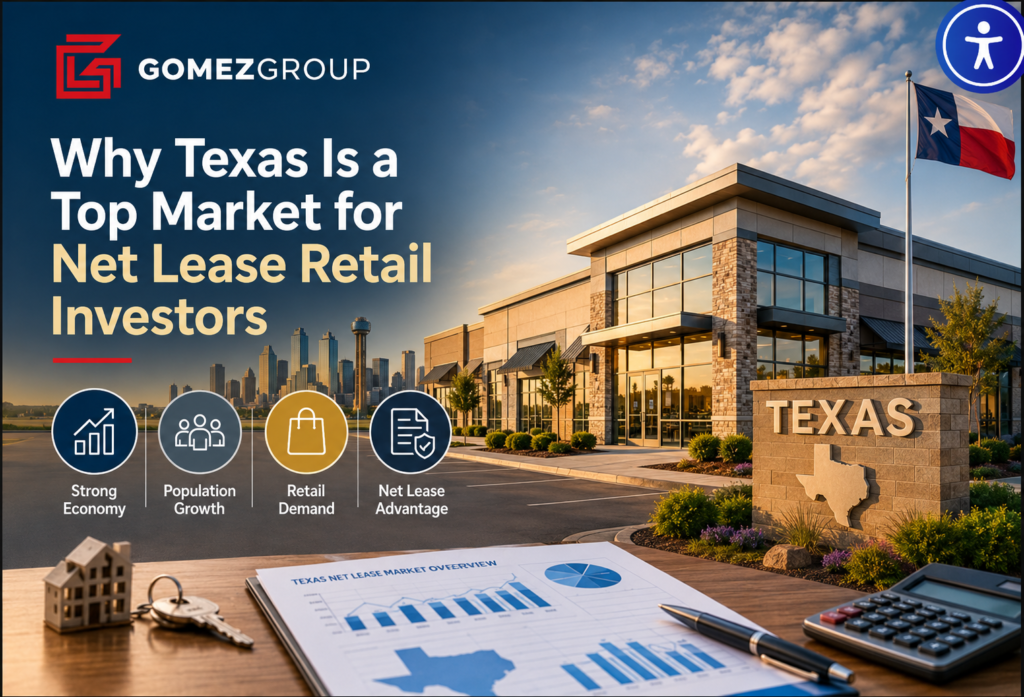
Texas continues to attract real estate investors because of its growing cities, expanding communities, and diverse business activity. These factors create opportunities for retail properties that serve everyday consumer needs.
For investors exploring net lease investing in Texas, the state offers access to established retail markets, growing suburban areas, and tenants across several industries.
However, a strong market alone does not guarantee a successful investment. Understanding local demand, lease terms, tenant strength, and property costs helps investors make better decisions.
What Makes Texas Attractive for Net Lease Investments?
Texas offers a combination of population growth, business activity, and varied retail demand. Major metropolitan areas and smaller communities provide different opportunities for investors, depending on their investment goals.
Here are some important factors behind the state’s appeal:
- Growing communities: Population shifts can increase demand for grocery stores, pharmacies, restaurants, and other neighborhood services.
- Business expansion: Companies continue to evaluate Texas for its workforce, transportation networks, and business environment.
- Diverse retail markets: Investors can explore properties serving urban neighborhoods, suburban communities, and regional shopping destinations.
- Everyday consumer needs: Essential retail businesses may maintain customer demand across changing economic conditions.
Investors evaluating Texas net lease properties should look beyond statewide growth figures. Local competition, household spending, nearby development, and tenant performance can influence an individual property’s long-term prospects.
Which Texas Markets Offer Different Investment Opportunities?
Texas is not a single, uniform retail market. Each city has its own economic drivers, consumer patterns, and property characteristics. Understanding these differences can help investors narrow their search.
| Market | What Investors Should Consider |
| Dallas–Fort Worth | Population growth, expanding suburbs, and a broad range of retail businesses |
| Houston | A large metropolitan economy, diverse employment sectors, and demand for neighborhood services |
| Austin | Technology-related employment, residential growth, and changing consumer needs |
| San Antonio | Established neighborhoods, tourism activity, and demand for everyday retail services |
| Secondary cities | Local employment, housing development, and the strength of nearby retail competition |
Investors searching for a shopping center for sale in Texas should compare locations based on the property’s surrounding trade area, tenant mix, accessibility, and future development.
A growing city may offer attractive opportunities, but the right investment depends on the specific property and its ability to support reliable rental income.
How Does the Net Lease Structure Benefit Investors?
Net lease agreements assign certain property expenses to tenants, which can make ownership more predictable. The expenses covered depend on the lease type.
- Single net lease: The tenant pays rent and certain expenses, usually property taxes.
- Double net lease: The tenant pays rent, property taxes, and insurance.
- Triple net lease: The tenant pays rent, property taxes, insurance, and specified maintenance costs.
Triple net leases can reduce the landlord’s responsibilities, but structural repairs and major replacements may still be the owner’s responsibility.
Before buying, review the lease term, rent increases, renewal options, and expense responsibilities to understand the property’s potential income and costs.
What Should Investors Check Before Buying a Retail Property?
A property’s location and tenant name can attract attention, but the financial and operational details deserve equal consideration.
Use this checklist when reviewing a potential investment:
- Tenant financial strength: Examine the tenant’s financial condition, business performance, and ability to meet rental obligations.
- Lease duration: Check how much time remains before the lease expires and whether renewal options are available.
- Rental income: Review current rent, scheduled increases, and the possibility of future vacancies.
- Property condition: Assess the building’s maintenance needs and potential capital expenses.
- Location quality: Evaluate traffic access, visibility, parking, nearby housing, and competing businesses.
- Exit strategy: Consider how lease expiration, tenant demand, and market conditions could affect future resale.
Investors researching Texas commercial real estate should also review property taxes, insurance costs, financing terms, and local development plans. These expenses can affect net income even when the tenant pays many operating costs.
A careful review helps investors understand both the property’s earning potential and the risks that may not be obvious during an initial inspection.
How Are Retail Demand and Leasing Patterns Changing?
Online shopping has changed consumer habits, but physical stores remain important for groceries, pharmacies, restaurants, and convenient pickup services. Investors should consider these trends in retail spaces when evaluating long-term demand.
For example, pharmacies may benefit from nearby residential areas, while restaurants often depend on visibility, parking, and customer traffic. Investors should also check local competition and population growth.
Before buying, consider whether the property can attract new tenants if the current business leaves. Its layout, location, and condition can affect how easily it can be leased again.
What Risks Should Net Lease Retail Investors Understand?
Net lease investments can provide contractual rental income, but they are not risk-free. Investors need to understand how tenant, lease, and property issues may affect performance.
Tenant concentration: A property leased to one business may lose most or all of its rental income if that tenant closes or defaults.
Lease rollover: A lease approaching expiration can create uncertainty around renewal, rent negotiations, and potential vacancy.
Unexpected expenses: Landlords may remain responsible for certain structural repairs, replacements, or costs not assigned to the tenant.
Changing market conditions: New competition, shifting consumer demand, and slower local growth can affect property performance.
Financing and resale risk: Interest rates, lending requirements, and investor demand can influence borrowing costs and future selling opportunities.
Investors should evaluate these risks alongside expected rental income. A property with a strong tenant and a clear lease structure may still require careful planning for future repairs, refinancing, and lease renewal.
Make a More Informed Texas Retail Investment Decision
Texas offers a range of retail investment opportunities, but successful ownership requires more than choosing a growing city. Investors need to understand tenant stability, lease obligations, local demand, and the costs that may affect future income.
Careful research can help identify properties that align with their investment goals and risk tolerance. Net lease investing in Texas requires a property-specific approach, and Gomez Group can help investors explore opportunities with greater clarity.
Key Takeaways:
- Texas offers diverse retail markets, from major metropolitan areas to smaller growing communities.
- Tenant credit quality and lease terms are essential when assessing rental income.
- Property taxes, insurance, repairs, and financing costs can affect overall returns.
- Local demographics and competition help determine the strength of retail demand.
- A detailed property review can reveal risks that statewide growth trends may overlook.
Frequently Asked Questions:
1. Why do investors consider Texas for net lease retail properties?
Texas offers diverse local economies, growing communities, and retail demand across several industries. Investment quality still depends on the property, tenant, lease, and purchase price.
2. Which Texas cities should net lease investors research?
Dallas–Fort Worth, Houston, Austin, and San Antonio are useful starting points. Investors should compare local employment, population trends, retail competition, and tenant demand before choosing a market.
3. Are triple net lease properties completely passive investments?
No. Tenants typically cover specified operating expenses, but landlords may still face structural repairs, vacancies, lease negotiations, and other ownership responsibilities.
4. What documents should buyers review before purchasing a net lease property?
Buyers should review the lease agreement, rent schedule, tenant financial information, property inspection, title records, tax details, insurance requirements, and relevant financial statements.
5. How can Gomez Group help investors evaluate Texas retail opportunities?
Gomez Group can be a resource for investors researching retail property opportunities and comparing potential investments. Buyers should assess each property’s lease terms, tenant strength, expenses, and location before making a decision.