
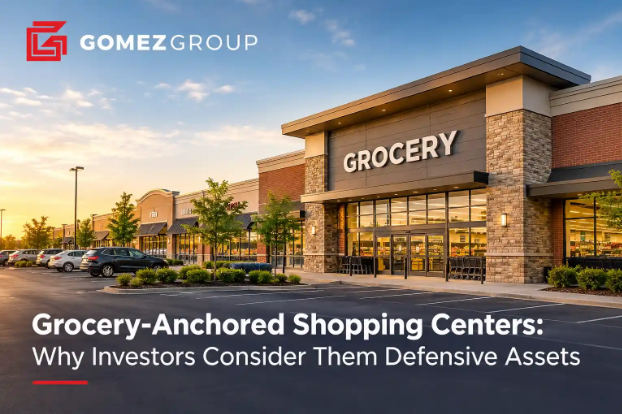
Investors often look for commercial properties that can maintain steady demand during uncertain economic conditions. Grocery-anchored shopping centers can offer this stability because they serve everyday consumer needs.
With essential retail services, regular customer visits, and potential rental income, a grocery anchored shopping center can be an attractive option for investors seeking long-term value and more predictable property performance.
Key Takeaways
- Grocery-anchored shopping centers benefit from consistent demand for essential goods and everyday services.
- Strong anchor tenants can attract regular foot traffic and support nearby businesses.
- Location, accessibility, population growth, and competition influence long-term property performance.
- A balanced tenant mix can help reduce reliance on a single business category.
- Investors should review rental income, lease terms, operating costs, and capital expenditures before buying.
- Changing retail trends can affect tenant demand, property value, and future investment opportunities.
- Careful financial analysis helps investors assess risks and make informed commercial real estate decisions.
Why Are Grocery-Anchored Shopping Centers Considered Defensive Assets?
Grocery stores sell essential products that people need in all economic conditions. Even when consumers cut back on nonessential spending, they still buy food and household supplies. This ongoing demand helps maintain regular foot traffic and supports nearby businesses.
For investors, a grocery anchored retail investment offers exposure to properties supported by routine shopping habits. These centers can benefit from repeat visits, a mix of tenants, and long-term leases that may provide more predictable rental income. However, performance still depends on the location, tenant quality, lease terms, and operating expenses.
How Does a Strong Anchor Tenant Support Property Performance?
An anchor tenant helps attract customers to a retail property. In an anchor tenant shopping center, a well-established grocery store brings regular visitors who may also shop at nearby pharmacies, cafes, salons, and service businesses.
This shared foot traffic can benefit smaller tenants and increase overall activity.
Investors should review the anchor tenant’s strength and lease terms, including:
- Financial stability and market presence.
- Remaining lease term and renewal options.
- Rental payment history and obligations.
- Store performance in the local market.
- Availability of replacement tenants.
A strong anchor can support property performance, but investors should also consider the risks if the grocery store closes or relocates.
What Location Factors Make These Properties More Attractive?
Location affects customer demand, tenant interest, and property value. Grocery-anchored centers often perform well in established neighborhoods where residents need daily essentials.
When assessing shopping centers for sale, investors should look beyond appearance and advertised income to evaluate the local community and customer demand.
Consider these location factors:
- Population density: Nearby households can provide a consistent source of customers.
- Accessibility: Convenient entrances, road connections, and parking can improve visits.
- Residential growth: New housing developments may increase demand for local retail services.
- Competition: Nearby grocery stores can affect customer traffic and tenant performance.
- Neighborhood income levels: Local purchasing power can influence spending patterns.
Investors should review local development plans and consumer trends. Growing residential areas may attract new tenants, while oversupplied markets can make leasing more difficult.
How Can Tenant Mix Improve Long-Term Retail Stability?
A grocery store attracts customers, but surrounding businesses also influence a center’s performance. A mix of pharmacies, coffee shops, dry cleaners, and personal care businesses can meet more daily needs and encourage repeat visits.
A neighborhood shopping center investment should consider the full tenant mix, not just the anchor store.
Look for these signs of a healthy tenant mix:
- Businesses offering essential or frequently used services.
- Tenants serving different customer needs.
- Occupancy levels that support rental income.
- Lease expirations spread across different periods.
- Retail spaces that can accommodate future tenants.
A diverse tenant mix can reduce reliance on one business category. However, vacancies, tenant turnover, and weak lease terms can still affect cash flow, even when the anchor store remains open.
What Financial Factors Should Investors Review Before Buying?
A property’s defensive qualities matter only when its financial structure supports the investment. Investors should evaluate both current income and the costs required to maintain the property.
Start by reviewing the rent roll, operating statements, lease agreements, and recent maintenance records. These documents help establish whether the property’s reported income reflects its actual financial performance.
Key factors to assess include:
- Net operating income (NOI): Review rental income after operating expenses but before debt service and income taxes.
- Occupancy rate: Check how much of the property is leased and whether vacancies are increasing.
- Lease structure: Understand responsibility for taxes, insurance, maintenance, and common-area expenses.
- Capital expenditures: Estimate upcoming costs for roofs, parking lots, HVAC systems, and other major components.
- Tenant concentration: Determine how much income depends on the anchor store.
- Financing terms: Consider interest rates, loan maturity, and debt-service requirements.
Investors should also compare the property’s asking price with its income potential and local market conditions. A grocery-anchored center is not automatically a sound purchase simply because it contains an essential retailer.
How Do Retail Trends Influence Investment Decisions?
Retail demand continues to evolve as consumers balance in-store shopping with online purchases. Grocery stores remain important to many communities, but changing shopping habits can affect store formats, delivery services, and the amount of physical retail space needed.
Following trends in retail spaces can help investors understand how these changes may influence tenant demand and property operations.
Investors should also study recent shopping center investment sales to understand comparable property transactions and changing buyer expectations. Comparable sales can provide useful context, but differences in tenant quality, lease terms, property condition, and location must be considered.
Make More Informed Decisions With Gomez Group
Grocery-anchored retail properties can offer defensive characteristics through essential consumer demand, recurring visits, and a mix of complementary businesses. However, investors still need to assess tenant quality, lease structures, property expenses, and local market conditions before committing capital.
Gomez Group can help investors evaluate commercial real estate opportunities by focusing on property fundamentals and long-term investment objectives. A careful review of income, risks, and market positioning can help you identify properties that better align with your investment strategy.
Frequently Asked Questions
- Why are grocery-anchored shopping centers considered defensive investments?
They serve everyday consumer needs, which can help support regular customer traffic and tenant demand during economic uncertainty. However, results depend on location, lease quality, competition, and operating costs. - Do grocery-anchored centers provide stable rental income?
They may provide more predictable rental income when supported by strong tenants and long-term leases. Vacancies, tenant defaults, rising expenses, and lease expirations can still affect returns. - What should investors check before buying a grocery-anchored center?
Review the anchor tenant’s financial strength, lease terms, occupancy, rental income, operating expenses, upcoming capital expenditures, and the property’s location. - Can smaller businesses benefit from a grocery anchor?
Yes. Grocery stores can attract regular customer traffic that benefits nearby pharmacies, cafes, salons, and other service businesses. The actual benefit depends on tenant compatibility and customer shopping patterns. - Are grocery-anchored shopping centers suitable for every investor?
No. These properties may suit investors seeking income-oriented commercial real estate, but they still involve leasing, financing, maintenance, and market risks. Investors should assess their capital, risk tolerance, and investment goals before purchasing.