

The standard 1031 exchange is a cornerstone of commercial real estate investment. It allows you to defer capital gains by selling a property and acquiring a new one within a specific timeframe. This process, also known as a forward exchange, works well when you have a clear timeline and a ready buyer for your property.
Sometimes, however, a perfect opportunity appears before you are ready to sell. In other cases, the ideal property is one that requires significant capital improvements. In these situations, a standard exchange is not enough. Sophisticated investors use advanced strategies to achieve their goals.
This article explores two of these strategies: the Reverse Exchange and the Improvement Exchange. They offer greater flexibility, but they also come with increased complexity and risk. For a full overview of the standard process, you should first read our guide, The Investor's Framework to 1031 Exchanges.
In This Guide
The Reverse Exchange: Acquiring Your Target Property First
A reverse exchange allows you to acquire your replacement property before you sell your existing property. This structure is a solution for specific market conditions and strategic opportunities.
The Strategic Advantage: Why Would an Investor Do a Reverse Exchange?
There are several scenarios where a reverse exchange is the best option.
- A "Must-Have" Property Becomes Available. In a competitive market, a high-value asset might come to market unexpectedly. You may need to act immediately to secure it, long before you can list and sell your current property. A reverse exchange allows you to acquire this target property without missing the opportunity.
- Closing on a New Development. You may want to exchange into a property that is still under construction. A reverse exchange allows you to close on the new property as soon as it is ready, then gives you time to sell your existing asset.
- Risk of a Failed Upleg. In some cases, an investor is concerned their own sale might not close on time. A reverse exchange ensures the new property is already secured, removing the risk of missing the 180-day acquisition deadline of a standard exchange.

The Mechanics: The Role of the Exchange Accommodation Titleholder (EAT)
You cannot own both your old property and your new property at the same time in a 1031 exchange. To solve this, the process requires a specialized third party.
Your Qualified Intermediary (QI) will create a special-purpose entity called an Exchange Accommodation Titleholder, or EAT. The EAT is a limited liability company (LLC) that takes title to and "parks" one of the properties on your behalf.
Seller
Original Owner
EAT
(Holds Title)
Buyer
(You)
There are two primary ways to structure this:
The EAT buys and holds your target replacement property. You then have 45 days to formally identify the property you plan to sell. You have 180 days from the EAT's purchase to sell your original property and complete the exchange.
In some cases, especially with financing, it is easier for you to take title to the new property directly. In this scenario, the EAT takes title to your existing property. You then acquire the new property, and the EAT works to sell the old property within the 180-day window.
Critical Risks and Considerations
The flexibility of a reverse exchange comes with significant risks.
- Financing Challenges. Securing a loan for a property that will be held by an EAT is complex. Many traditional lenders are unfamiliar or unwilling to work with this structure. You will likely need to work with specialized lenders or secure bridge financing, often at a higher cost.
- Market Risk. You are taking on the risk that you will not be able to sell your original property within the 180-day deadline. If the market shifts or your buyer falls through, the exchange could fail. This would result in a fully taxable event.
- Higher Costs. Reverse exchanges involve more legal work, more complex agreements, and higher fees from your Qualified Intermediary. You must factor these additional costs into your analysis.
"The biggest risk in a reverse exchange is the 180-day sale clock on your old property. We advise clients to have a high degree of confidence in their asset's marketability before attempting this. If there is any question about your ability to sell within six months, a reverse exchange might not be the right tool for the job."
– Gomez Group
The Improvement Exchange: Building Value with Tax-Deferred Dollars
An improvement exchange, also called a construction exchange, allows you to use your tax-deferred exchange funds to make capital improvements to your replacement property.
The Strategic Advantage: Acquiring and Renovating a Value-Add Property
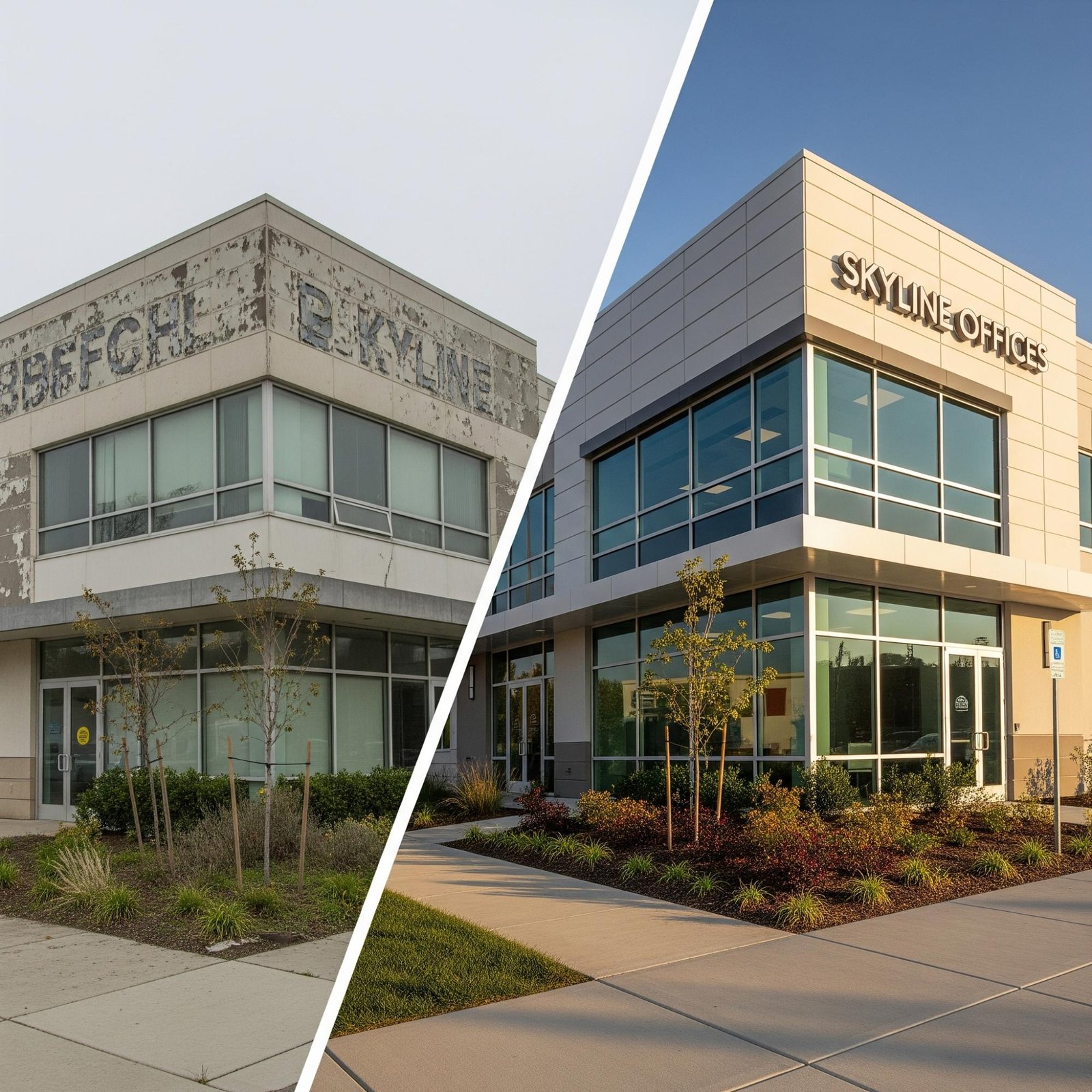
This strategy is ideal for value-add investors. You may find a property that is well-located but in need of significant renovation. An improvement exchange allows you to acquire this property and use your sale proceeds to fund the construction or improvements.
This is a powerful way to build equity. The funds used for construction are part of the exchange. This allows you to create a more valuable asset using the full, pre-tax value of your original investment. For investors focused on growth, this is a key strategy. It is also useful for build-to-suit projects where you acquire land and build a new facility.
How It Works: Using Exchange Funds for Capital Improvements
Similar to a reverse exchange, this structure requires an EAT to hold title to the replacement property while it is being improved.
You close on your original property. The funds go to your Qualified Intermediary. You then acquire the replacement property, and title is transferred to the EAT. The QI disburses the remaining exchange funds to the EAT to pay for the construction and improvements. You manage the renovation process. Once the improvements are complete, or at the end of the 180-day period, the EAT transfers the improved property back to you.
The 180-Day Challenge: Completing Construction Within the Exchange Period
The biggest challenge of an improvement exchange is the timeline.
All of the improvements you want to include in the exchange must be fully completed and paid for before the property is transferred back to you. This must happen within the 180-day exchange period. Any exchange funds that are not spent on the property by the 180th day will be returned to you and will be taxable as "boot."
Potential delays from permitting, contractor availability, and supply chain issues can put the entire exchange at risk. Detailed planning and a realistic construction schedule are essential for success.
Which advanced exchange strategy seems most useful for your investment goals?
Key Structural Differences
| Feature | Standard Exchange | Reverse Exchange | Improvement Exchange |
|---|---|---|---|
| Primary Use Case | Straightforward property swap. | Acquire a key asset before selling. | Fund renovations on a new property. |
| Complexity | Low | High | High |
| Typical Cost | Standard QI Fees | Higher QI and legal fees. | Higher QI and legal fees. |
| Key Timeline Risk | Finding a new property in 45 days. | Selling the old property in 180 days. | Completing construction in 180 days. |
Is an Advanced 1031 Exchange Right for Your Portfolio?
Assessing the Risk vs. Reward
These advanced strategies offer greater flexibility to achieve specific investment goals. That flexibility comes at the cost of higher complexity, greater risk, and increased transaction costs. You must weigh the strategic benefit of acquiring a specific property or funding a renovation against these challenges.
Why Expert Guidance is Non-Negotiable
Reverse and improvement exchanges are not do-it-yourself transactions. They require a team of experts who have experience with these specific structures. This includes a knowledgeable commercial real estate broker, a skilled transaction attorney, and a reputable Qualified Intermediary that specializes in advanced exchanges. These strategies can be powerful tools. With the right team and careful planning, they can help you build your portfolio in ways that a standard exchange cannot.
Have questions about these or other investment strategies?
Contact Our Team Today