
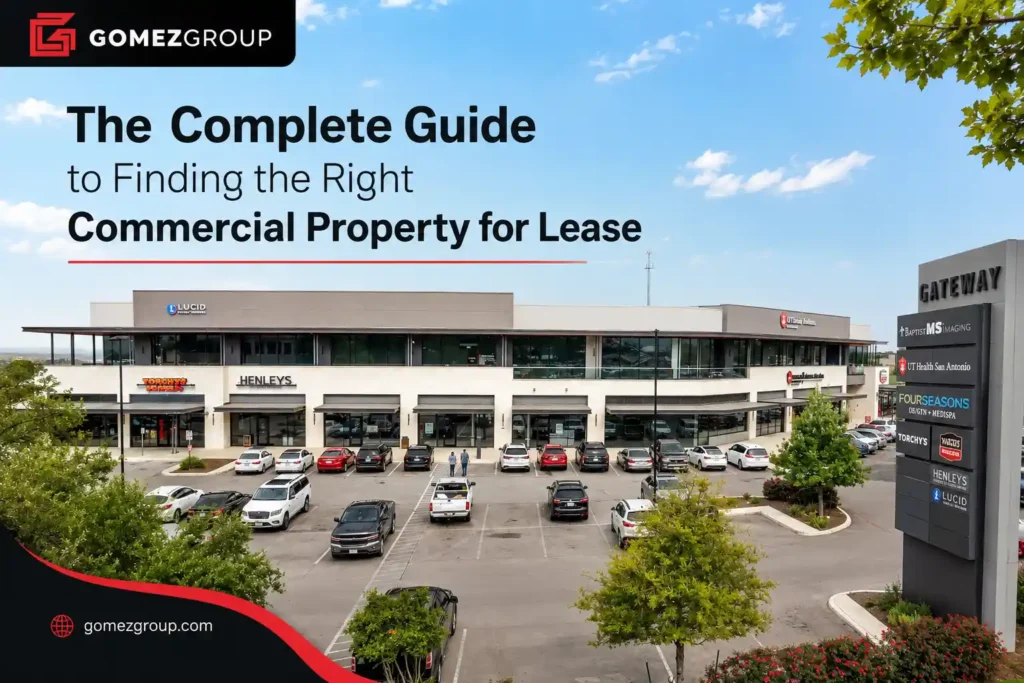
Picking a commercial property for lease isn’t just about staying within budget. Location, size, the property’s condition, and the lease terms all play into whether the space actually works once you’re up and running day to day. A property can look great on that first walkthrough and still cause headaches down the line, like tight parking, hidden costs, or restrictions on how you’re allowed to use the space.
Your lease also spells out the details that define your tenancy: rent, permitted use, expenses, maintenance responsibilities, and more
Did You Know? According to FindLaw, FindLaw’s overview of commercial lease agreements provides a helpful breakdown of the key aspects of commercial leases.”
Understanding these details before you sign matters, especially when you’re locking yourself into a space for several years. Spend a little extra time reviewing what you’re agreeing to now, and you’ll thank yourself later when you’re not blindsided by a cost or restriction nobody mentioned upfront.
Maybe you’re opening your first location. Maybe you’re outgrowing your current one or eyeing a new market altogether. Either way, it helps to know what you’re looking for before you start touring properties, and that’s what this guide walks through.
Start With Your Business Requirements
Before you start touring anything, get specific about what your business actually needs from a space. It’s tempting to skip this step; a property either “feels right” or it doesn’t, but a five-minute checklist can save you from picking a space just because it looked good or the rent was low.
Walk through:
- The type of business you operate
- Required floor space
- Customer and employee capacity
- Storage or loading requirements
- Parking needs
- Accessibility
- Utility and internet requirements
- Room for future expansion
For retail commercial properties, visibility, parking, and customer access may matter more than having the largest available floor plan. A distributor cares about dock height and truck turning radius and would happily trade curb appeal for a functional loading area. Neither is wrong; they’re just solving different problems.
Once you know what actually matters to your business, it gets a lot easier to cross properties off the list instead of second-guessing every listing you see.
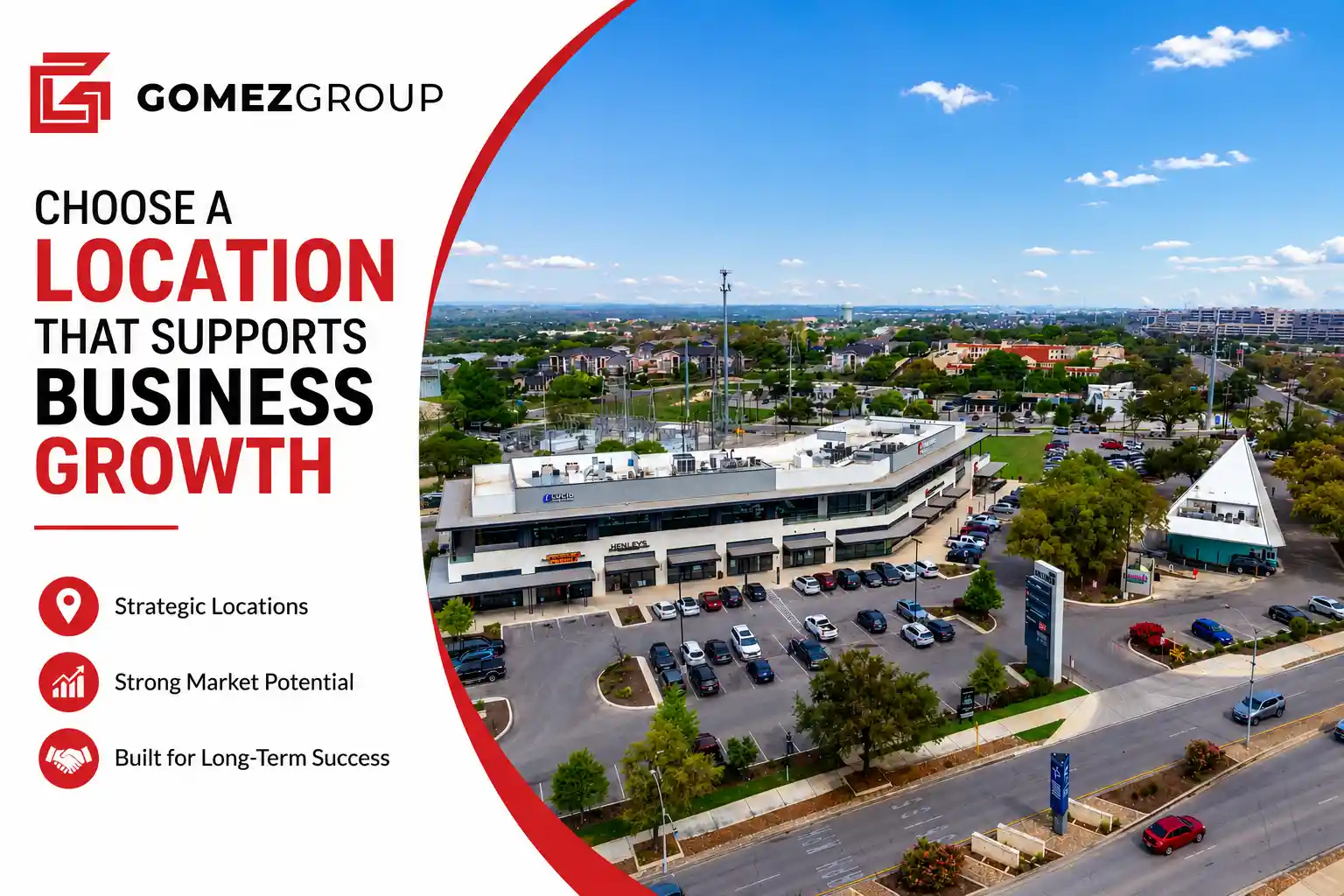
Choose a Location That Supports Business Growth
A property’s location shapes almost everything downstream of it: who walks in the door, how easy it is to staff, and how visible you are to people who’ve never heard of you. The cheapest option on the list isn’t a deal if customers can’t find it or employees don’t want to drive there.
Factors worth weighing:
- Target customer demographics
- Foot and vehicle traffic
- Visibility from major roads
- Parking availability
- Public transportation access
- Nearby complementary businesses
- Local competition
- Planned development in the area
A location with strong traffic and the right neighboring businesses does a chunk of your marketing for free, just by being visible. That said, an “ideal” location looks different depending on what you sell and how customers reach you; a law office has very different needs than a coffee shop.
It’s worth glancing past your current headcount, too. A space that has room to grow into can spare you a second move and a second round of moving costs a few years from now.
Compare Lease Structures Before Choosing a Property
Not every lease for commercial property puts the same financial burden on the tenant, and the label on the lease doesn’t always tell the full story.
Lease Type | Typical Tenant Costs | Often Suitable For |
Gross Lease | Primarily a fixed rent, with the landlord generally covering major property expenses | Businesses that want predictable monthly costs |
Modified Gross Lease | Rent plus certain operating expenses, depending on the agreement | Businesses open to a shared-cost arrangement |
Triple Net (NNN) Lease | Base rent plus expenses such as property taxes, insurance, and maintenance | Businesses prepared to take on more operating-cost responsibility |
Two spaces with the same base rent can have very different total costs once CAM, taxes, and insurance are added. Cushman & Wakefield reported U.S. retail asking rents rose 2.2% to $25.65 per sq. ft. in Q2 2026, showing why local market rates matter when comparing properties. Cushman & Wakefield: Compare the full cost over the lease term, not just the advertised rent.
Calculate the True Cost Before Signing
Base rent is rarely the whole bill. Before signing a commercial real estate lease contract, track down every expense that could land on your desk.
Look closely at:
- Base rent
- CAM charges
- Property taxes
- Insurance
- Utilities
- Maintenance and repairs
- Annual rent increases
- Security deposits
- Tenant improvement costs
Ask the landlord for a real breakdown of expenses, not just an estimate, and get the past couple of years of actual CAM bills if you can. Landlords who’ve kept costs in check are usually happy to show the numbers. The ones who dodge the question are worth a second look.
Once you know the real, all-in number, you can compare properties honestly instead of chasing headline rents that don’t mean much on their own.
Avoid Common Commercial Leasing Mistakes
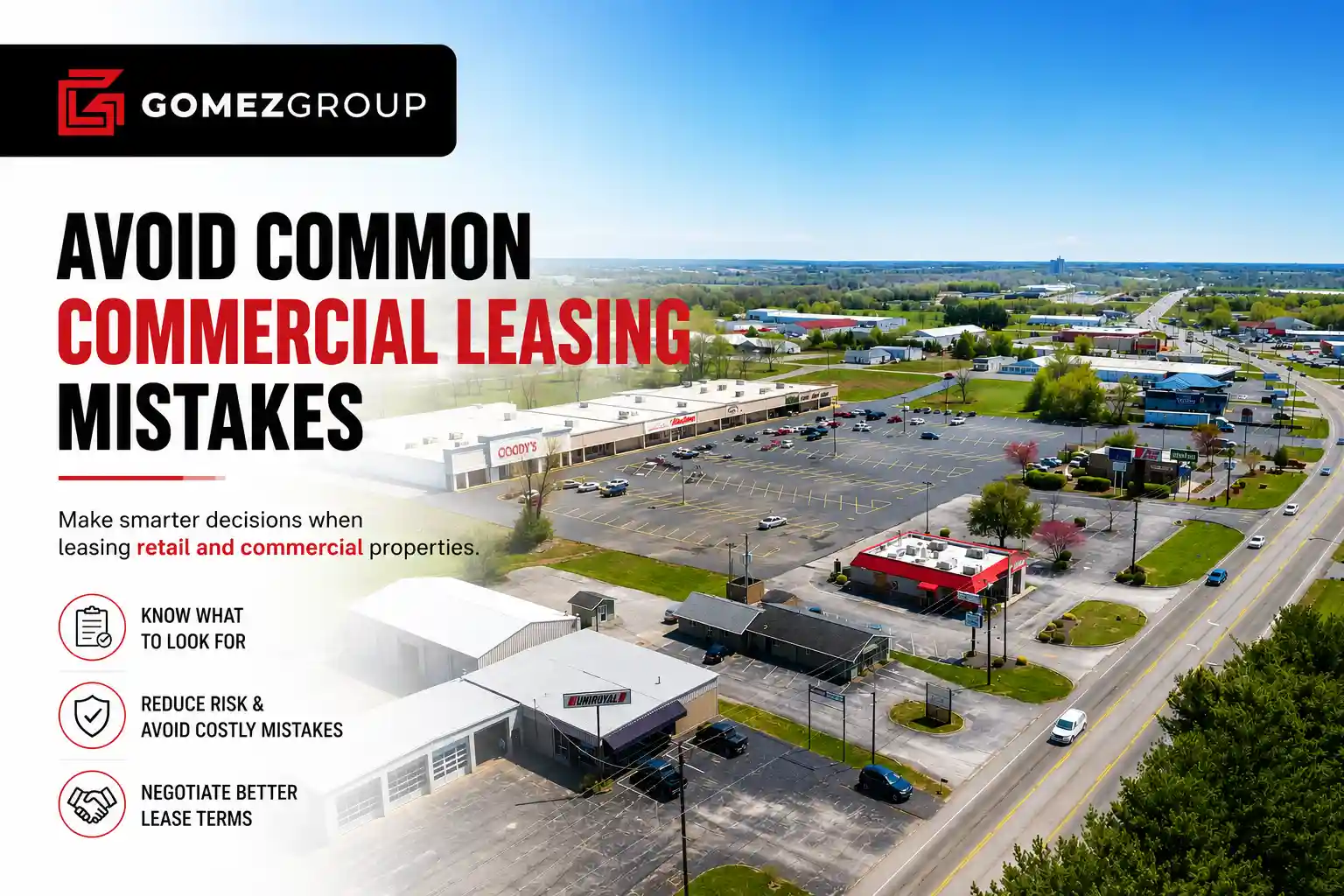
A property can check every box and still turn into a bad deal if the lease itself gets rushed.
Common mistakes includes:
- Choosing a property based only on advertised rent
- Leasing more space than the business actually needs
- Ignoring how rent escalates over the term
- Skipping research on the surrounding area
- Overlooking who’s responsible for maintenance
- Not understanding renewal and termination provisions
- Signing the first terms offered without pushing back
Most lease terms are negotiable; landlords expect some back-and-forth. Knowing your priorities before you sit down gives you something to negotiate around, instead of reacting to whatever’s put in front of you.
Complete a Final Property Checklist Before Signing
Before you sign, do one last pass over the property and the paperwork together. Confirm that:
- The property must meet commercial zoning laws and permit your intended business use.
- The building is in suitable condition
- Parking meets your business’s needs
- Utilities and internet service are adequate
- Maintenance and repair duties are clearly assigned
- You understand exactly how and when rent increases
- Renewal and exit options are spelled out
- The property has room for your expected growth
Zoning is the one that trips people up most. A space can look perfect and still be off the table if local rules don’t allow what you’re planning to do there. It’s worth confirming with the city before you fall in love with a location.
Find a Commercial Property That Supports Your Goals
Finding the right commercial property for lease comes down to a few basics: know what your business actually needs, weigh your location options, read the lease closely, and look past the sticker rent to the real cost. Do that homework now, and you’ll thank yourself later.
Whether you’re signing your first lease or already thinking ahead to investing, Gomez Group can help you explore the right commercial property for lease options or compare opportunities such as a shopping plaza for sale to support your long-term business goals.
Browse our available properties or reach out to our team to talk through what’s out there right now.
Frequently Asked Questions
1. What should I consider when choosing a commercial property for lease?
Location, size, parking, and zoning are the basics. But also picture where your business will be in five years, not just where it is now.
2. What costs should I consider besides commercial rent?
Taxes, insurance, CAM charges, upkeep. They stack on top of rent fast, so ask for real numbers before you fall for a low sticker price.
3. What should I review in a commercial real estate lease contract?
Renewal terms. Maintenance duties. And the permitted-use clause: half the tenants who skip it end up regretting it.
4. Which lease for commercial property is best for a small business?
It depends on what you’d rather have: predictable rent (gross lease) or a lower number upfront with more cost on your plate later (NNN).
5. What should retail businesses look for in a commercial property?
Foot traffic gets you noticed. Your neighbors decide whether that traffic actually helps you or quietly works against you.