
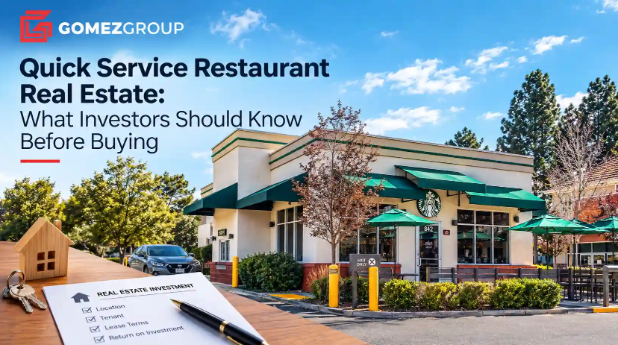
Buying a restaurant property requires more than checking the asking price and current rent. Investors should review the lease, tenant, location, property condition, and future demand before making a decision. Quick service restaurant real estate can offer rental income and long-term potential, but the details behind each property matter.
The goal is to understand what you are actually buying, what responsibilities you will have as the owner, and what could affect the property’s value in the future.
Key Takeaways:
- Review the complete lease before making an investment decision.
- Understand the tenant’s financial strength and guarantee structure.
- Examine traffic, visibility, access, parking, and surrounding development.
- Evaluate cap rates alongside the property’s complete financial picture.
- Inspect the building and confirm repair responsibilities.
- Consider potential uses if the current tenant leaves.
- Compare the property with other commercial investment opportunities.
- Complete financial, lease, property, and market due diligence.
Start by Reviewing the Lease
The lease determines how rental income works and which property expenses are paid by the tenant or landlord. This makes lease review one of the first steps in evaluating a restaurant property.
A QSR net lease investment may provide a relatively simple ownership structure because the tenant can be responsible for certain taxes, insurance, and maintenance costs.
When reviewing quick service restaurant real estate, investors should carefully examine:
- Current base rent
- Remaining lease term
- Scheduled rent increases
- Renewal options
- Property tax responsibilities
- Insurance requirements
- Maintenance obligations
- Assignment rights
- Default provisions
- Termination conditions
Do not rely only on the property’s advertised lease type. Read the actual agreement and identify every responsibility that remains with the owner.
Check the Tenant’s Financial Strength
The tenant is an important part of any single-tenant restaurant investment. A recognizable brand can help support customer demand, but the financial strength of the actual tenant also matters.
First, determine whether the restaurant is operated by the brand itself or by a franchisee. A franchisee may have a different financial position and guarantee structure than a large corporate operator.
Review factors such as:
- Tenant operating history
- Corporate or franchisee status
- Financial strength
- Lease payment history
- Corporate guarantees
- Number of operating locations
- Renewal history
Investors should also understand whether the lease is tied to a specific operating company or supported by a stronger parent organization.
Examine the Location From Every Angle
Restaurant performance is closely connected to convenience. Customers often choose quick-service locations because they can enter, order, and leave easily.
For this reason, investors should study the property’s access and surrounding area instead of relying only on demographic information.
Consider:
- Traffic volume
- Traffic direction
- Road access
- Intersection visibility
- Parking availability
- Drive-thru access
- Nearby housing
- Employment centers
- Competing restaurants
- Planned development
A highly visible property with convenient access may remain useful to future restaurant operators, even if the current tenant eventually leaves.
Also check whether planned road improvements, construction, or nearby development could change traffic patterns around the property.
Follow Important Retail Market Trends
Restaurant properties are part of the broader retail market. Changes in consumer habits, development patterns, tenant demand, and interest rates can affect how these properties perform.
Investors should follow trends in retail spaces to understand how customer preferences and changing retail environments could affect restaurant locations.
Convenience-focused properties may continue to attract operators, but local conditions should always be considered. A national trend does not necessarily reflect what is happening in a particular city or neighborhood.
Look at current development, nearby vacancies, new retail projects, and competing restaurant concepts before making assumptions about future demand.
Understand the Property’s Financial Picture
The purchase price is only one part of the analysis. Review the property’s income, expenses, lease terms, financing, and future value. QSR cap rates can vary based on the tenant, lease term, location, and market conditions. Consider the full financial picture before investing.
| Financial Factor | What Investors Should Review |
| Purchase price | Whether the price reflects current income |
| Net operating income | Income after applicable operating expenses |
| Rent increases | Timing and amount of contractual increases |
| Lease term | Remaining guaranteed income period |
| Expenses | Costs paid by tenant versus landlord |
| Financing | Impact of debt on cash flow |
| Property taxes | Current obligations and future changes |
| Exit potential | Factors that could affect resale demand |
A property with attractive current income may still require careful review if major expenses or lease risks exist.
Inspect the Physical Property
A strong lease does not remove the need for a property inspection. Investors should check the roof, HVAC, parking, exterior, plumbing, electrical systems, drainage, signage, drive-thru areas, and potential environmental concerns.
They should also confirm whether repairs are the tenant’s or landlord’s responsibility. Reviewing the lease with the inspection report can clarify these obligations and identify possible capital improvements that may be needed during or after the lease.
Consider What Happens After the Lease
Do not assume the current tenant will always renew. Investors should consider how easily the property could attract another operator.
A fast food investment property with good visibility, access, parking, and zoning may offer more flexibility.
Check whether:
- Another restaurant could use the building
- Access and parking are sufficient
- Major renovations would be needed
- Zoning allows other uses
- The site could attract other commercial users
This helps investors assess the property’s future flexibility and resale potential.
Compare the Property With Other Opportunities
Compare restaurant properties with other commercial assets based on income, management needs, tenant exposure, and market risks.
A restaurant investment property may offer a long lease and lower management needs, but tenant and property risks still matter.
Consider your capital, financing, investment goals, holding period, and desired level of involvement before investing.
Complete Due Diligence Before Closing
A structured due diligence process helps investors identify potential issues before completing a transaction.
Review the Financials
Confirm:
- Current rent
- Operating income
- Rent escalation schedule
- Property expenses
- Tax obligations
- Insurance costs
- Financing assumptions
Review the Lease
Confirm:
- Tenant and guarantor
- Remaining term
- Renewal options
- Default provisions
- Assignment rights
- Maintenance responsibilities
- Termination rights
Review the Property
Confirm:
- Physical condition
- Site access
- Visibility
- Parking
- Drive-thru configuration
- Zoning
- Environmental matters
Review the Market
Confirm:
- Population changes
- Nearby development
- Competing businesses
- Traffic patterns
- Retail demand
- Future land-use plans
Keeping these items organized can make the due diligence process easier and help investors ask better questions before committing capital.
Work With Experienced Commercial Advisors
QSR transactions involve several moving parts. Investors need to understand the lease, tenant, property, location, financial structure, and potential exit strategy.
An experienced commercial real estate professional can help investors review opportunities, understand market conditions, and identify important details that may not be obvious from a property listing.
Gomez Group works with commercial real estate investors on net lease and shopping center investment sales and can provide support throughout the transaction process.
Investors exploring net lease investments can also benefit from professional guidance when reviewing tenant credit, lease obligations, property pricing, and potential transaction risks.
Make Your Purchase Decision With Better Information
Look beyond the brand and rental income. Review the lease, tenant, location, property condition, finances, and future use before buying.
For investors considering quick service restaurant real estate, careful research can reveal potential risks and opportunities. Gomez Group can help evaluate commercial properties and net lease transactions.
Frequently Asked Questions:
1. What should investors look for in a QSR lease?
Investors should review the lease term, rental increases, renewal options, guarantees, maintenance duties, taxes, insurance, assignment rights, and default provisions.
2. Why does location matter for QSR properties?
Quick-service restaurants depend heavily on convenience. Traffic flow, visibility, road access, parking, and drive-thru availability can influence customer access and future tenant demand.
3. How are QSR cap rates determined?
Cap rates are influenced by factors such as property income, purchase price, tenant strength, lease duration, location, rent growth, and broader market conditions.
4. What happens if the current restaurant tenant leaves?
The owner may need to find a new tenant or consider another use for the property. Zoning, building design, access, parking, and local demand can affect re-leasing options.
5. How can Gomez Group assist restaurant property investors?
Gomez Group provides commercial real estate services and can help investors evaluate opportunities, understand property details, and navigate net lease and shopping center investment transactions.