

Objective: This guide explains the main ways to build passive income through real estate, from direct property ownership to net lease retail and pooled investment funds.
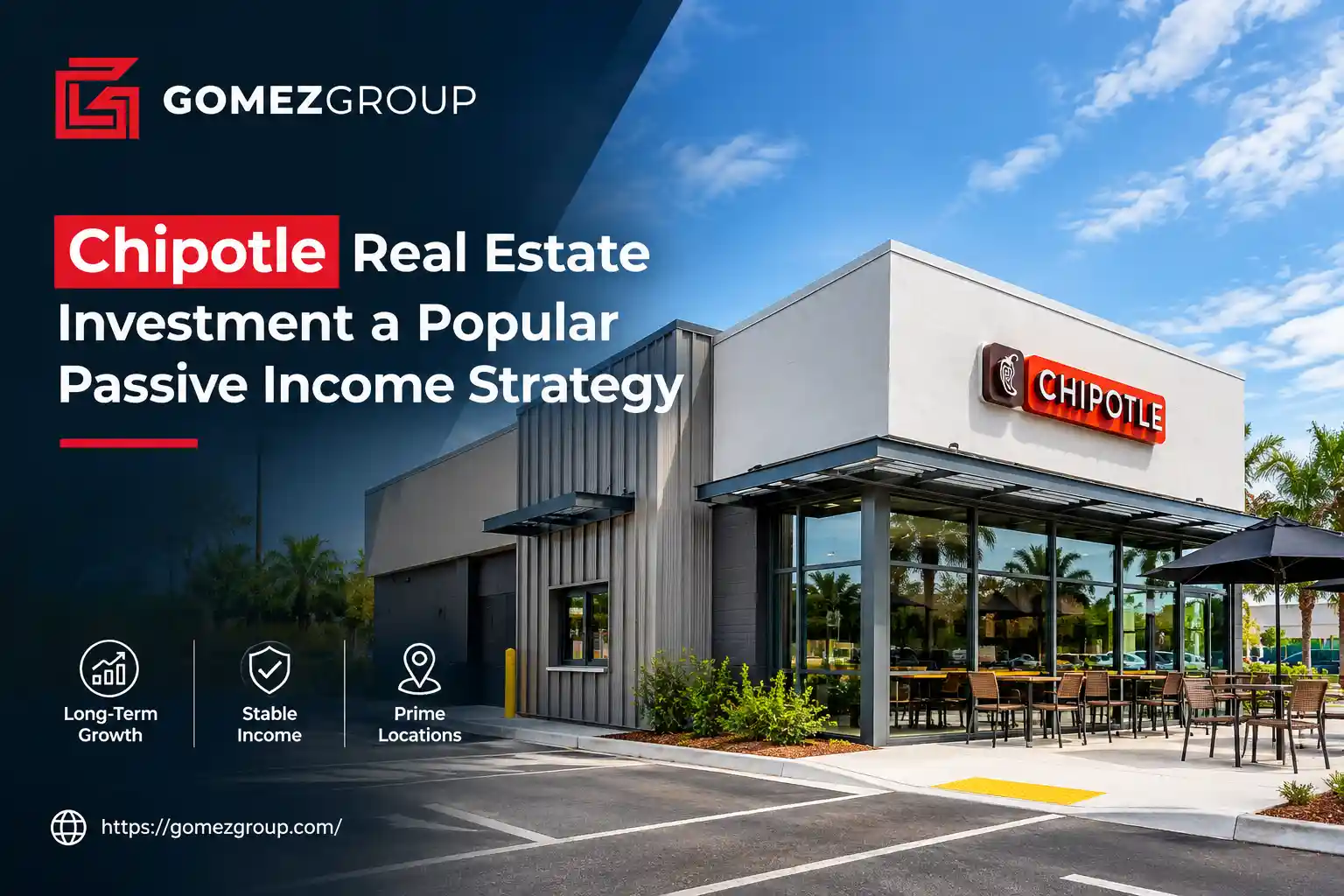
If you are asking how to invest in real estate for passive income, you are looking at one of the oldest wealth-building strategies around, and it still works. The appeal is simple: your money keeps earning while you get on with your life. A Chipotle Real Estate Investment is a good example of what that can look like in practice: a single-tenant retail property leased to a national brand, generating rent with very little ongoing landlord involvement.
To keep their tax-advantaged status, REITs are legally required to distribute at least 90% of their taxable income to shareholders every year, which shows just how central passive cash flow is to the wider real estate investment world.
This guide walks through the main routes available, from direct ownership to pooled funds, so you can work out which fits your situation.
Key Takeaways:
- Passive income real estate spans several routes, including rental property, REITs, and net lease retail
- Triple net lease assets shift most day-to-day landlord duties onto the tenant
- REITs are legally required to distribute at least 90% of taxable income to shareholders each year
- Diversifying across a few strategies tends to smooth out risk and cash flow
- Working with a specialized brokerage such as Gomez Group gives investors access to vetted, off-market opportunities
Why Is a Chipotle Real Estate Investment a Popular Passive Income Strategy?
Single-tenant retail leased to established national brands has become one of the more sought-after ways to generate hands-off income, and Chipotle properties are a frequently cited example.
What Makes Net Lease Retail Attractive
The tenant, not the landlord, typically covers property taxes, insurance, and maintenance under a net lease structure. That arrangement removes most of the day-to-day responsibility that comes with owning a rental property directly.
Tenant Credit and Lease Length Matter
A property leased to a financially strong national brand on a long-term agreement tends to trade at a lower cap rate than a weaker tenant on a short lease, simply because the income is viewed as more reliable.
What Are the Best Ways to Start Investing in Real Estate for Passive Income?
There is no single correct route. The right one depends on how much capital you have, how hands-on you want to be, and your appetite for risk.
Triple Net Lease Property Investments
This structure puts the tenant on the hook for taxes, insurance, and building upkeep, leaving the owner with largely passive rental income.
Why Single-Tenant Assets Work Well for Passive Investors
Because a single, credit-backed tenant occupies the whole building, there is only one lease to manage rather than dozens.
A quick-service restaurant real estate on a fifteen-year corporate lease is a common entry point for investors moving away from active property management.
Investing in a Real Estate Fund or REIT
For those who would rather not hold a property title at all, a publicly traded REIT offers exposure to a diversified pool of assets, with shares that can usually be bought and sold far more easily than a physical building.
Rental Property as an Investment
Plenty of people still choose this route, buying a house or small multi-unit building and hiring a manager to handle tenants, repairs, and rent collection. It takes more oversight than a net lease asset, but it also gives the owner more control over the property itself.
Real Estate Rental Property Investment Through Management Companies
This route does not have to mean fielding maintenance calls at midnight. Professional management companies can run the property day to day, which shifts the workload without giving up ownership.
How Do You Find the Right Opportunities as an Investor?
Finding a good deal takes more than browsing listings. Here is a practical sequence to follow:
- Set your target cap rate and preferred tenant type before you start searching
- Decide whether you want a physical property, a fund position, or a mix of both
- Review tenant credit strength and remaining lease term on any single-tenant deal
- Compare recent sales in the same submarket to check pricing
- Work with a broker who can show you both listed and off-market inventory
Many investors for real estate find that working alone limits them to whatever is publicly listed, which is often the smaller slice of what is actually available. A broker with an established network can bring deal flow that never reaches the open market. Curious what is currently on offer? View our available properties to see current net lease listings across more than forty states.
Weighing Diversification Against Simplicity
Holding one large net lease property is simple to manage but concentrates your risk in a single tenant. Splitting capital across a REIT position, a rental property, and a net lease asset spreads that risk, at the cost of a bit more admin.
Ready to talk through which route suits your goals? Get in touch with our team and we can walk you through current opportunities, including the single-tenant restaurant property currently available at The Crossing at Moore Farm in Celina, Texas
Final Steps to Begin Your Chipotle Real Estate Investment Journey
Passive income real estate is not a single product; it is a set of tools you can combine depending on your goals. A net lease asset suits someone who wants minimal involvement and stable rent from a strong tenant. A fund suits someone who wants diversification without owning a building outright. A rental property suits someone who wants more control and is comfortable hiring help to manage it. Gomez Group has closed more than two billion dollars in net lease and shopping center sales across forty-three states, giving investors a genuine head start on finding quality opportunities. Start browsing available properties today and take the next step towards passive income.
Frequently Asked Questions
1. What counts as passive income in real estate?
Broadly, it’s money that comes in without you being hands-on day to day. Rent from a net lease tenant fits that. So do dividends from a REIT.
2. Is a Chipotle Real Estate Investment a good starting point for a new investor?
It can be a solid one. You get a strong national tenant, predictable rent, and not much landlord work, which makes it an easier entry point than a property with several small tenants to manage.
3. How much money do I need to start investing in real estate for passive income?
That depends on the route. A publicly traded REIT can be bought with a modest sum. Buying a net lease property outright is a different story; you’re usually looking at a much larger amount or financing to bridge the gap
4. What is the difference between a REIT and owning a rental property directly?
With a REIT, you own shares in a portfolio someone else manages, and you can sell out fairly easily if you need to. Own the rental property yourself, and you get more say over it, but more to deal with too, even once a manager is in place.
5. How do I know if a net lease property is priced fairly?
Pull recent sales of similar properties, ones with a comparable tenant and lease term, and compare the cap rate against those. The asking price on its own won’t tell you much.