
Are you looking for low-touch, hands-off income, or maximum rental yields per square foot?
Every investor faces this crossroads: choosing between effortless stability and higher return potential. Securing the right commercial property comes down to matching the cash flow structure to your risk tolerance and long-term financial goals.
At Gomez Group, we help investors evaluate these trade-offs to acquire assets that build lasting wealth. Understanding how a multi tenant vs single tenant net lease impacts your portfolio is the fastest way to make a confident investment move.
Understanding the Basics of Net Leases
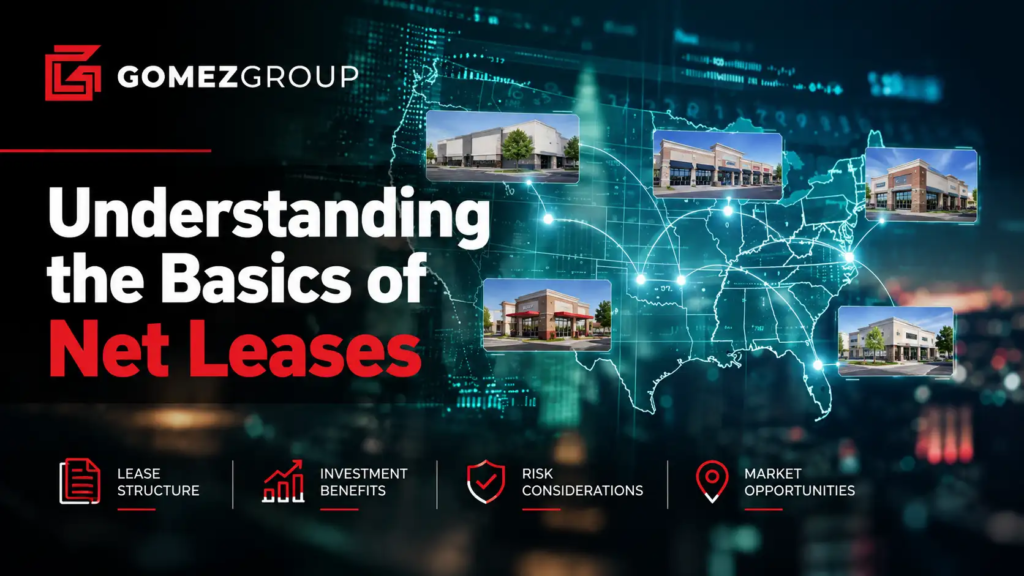
A net lease means your tenant pays base rent plus extra property costs like taxes, insurance, and routine upkeep. This keeps your day-to-day management light while giving you a steady income stream.
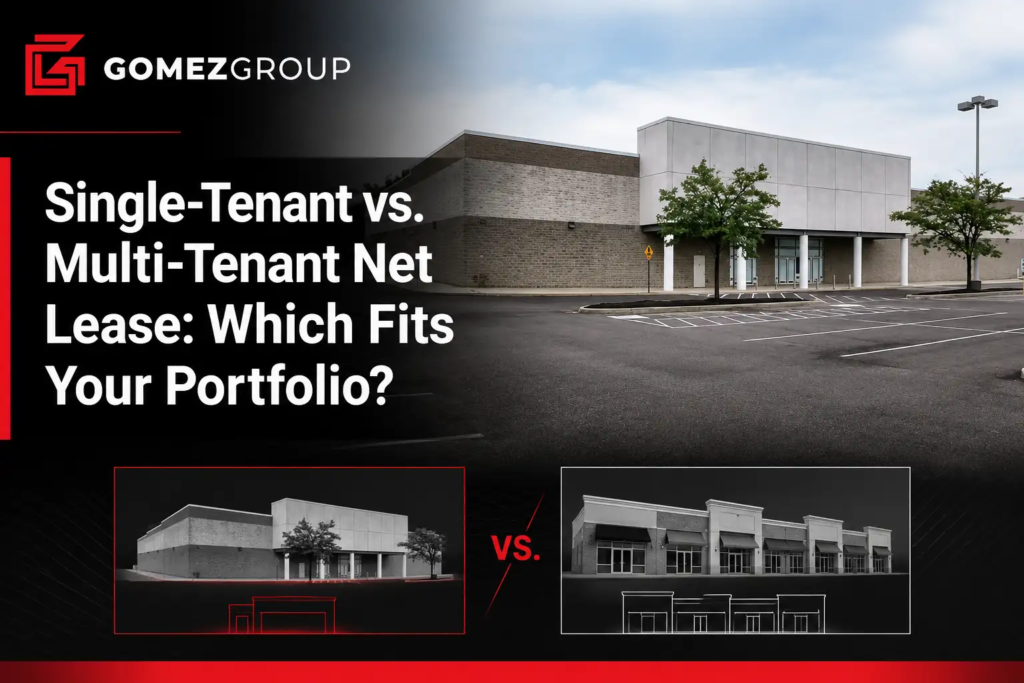
When comparing multi tenant vs single tenant options, the main difference comes down to how your physical space and tenant risks are spread out across the property.
What Is a Single-Tenant Net Lease?
A single-tenant property belongs to just one business occupying the whole building on a long lease, usually lasting 10 to 20 years.
Many of these deals rely on a single tenant NNN lease, where the tenant takes care of almost every building expense. That means you get a truly hands-off investment with almost no daily landlord duties.
Single-Tenant Flow:
[Landlord] —> (Long-Term Lease) —> [1 Single Tenant] —> Pays Base Rent + Taxes + Insurance + Maintenance
The Major Advantages of Single-Tenant Properties
Buying a standalone property is ideal if you want predictable cash flow without taking on a second job managing tenants.
- Hands-Off Operations: Your tenant handles day-to-day repairs, property maintenance, and operating costs.
- Predictable Cash Flow: Long-term leases ensure your rent checks arrive reliably for years.
- High-Credit Tenants: Standalone buildings often feature national brands, corporate headquarters, or essential businesses.
The Potential Drawbacks of Single-Tenant Assets
Even though they are simple to run, single-tenant properties carry a distinct concentration risk you should keep in mind.
Key Consideration: In a single-tenant property, vacancy is all or nothing. If your tenant leaves, your income drops to zero right away, and you have to cover expenses until you find a replacement.
- Binary Vacancy Risk: If your only tenant moves out or runs into financial trouble, your building income stops completely.
- Lower Initial Yields: Because these assets are so easy to manage, cap rates are usually lower than multi-tenant properties.
- Re-Leasing Delays: Filling a large, specialized standalone building with a new company can take significant time and budget.
What Is a Multi-Tenant Net Lease?
A multi-tenant property holds several different businesses under one roof, like a neighborhood shopping center, an office park, or a multi-unit industrial space.
This layout means you will manage multiple lease contracts, distinct lease end dates, and different tenant requests across the entire property.
The Benefits of Multi-Tenant Real Estate
Multi-tenant buildings work well if you want higher earning potential while protecting yourself against losing all your income at once.
| Benefit Category | Strategic Advantage | Portfolio Impact |
| Income Diversification | Divides your rent stream among several separate businesses | Prevents total loss of income when a single tenant decides to move out |
| Revenue Potential | Allows you to charge higher overall rent per square foot | Increases your property’s gross income potential |
| Staggered Leases | Leases expire in different years rather than all at once | Gives you regular chances to adjust rents up to current market rates |
The Challenges of Multi-Tenant Ownership
Managing several businesses in one building takes more time, active administration, and hands-on coordination.
- Higher Management Demands: Keeping up with shared spaces, utility splits, and individual lease terms takes active effort.
- Common Area Expenses: Shared space maintenance must be accurately tracked so you can get reimbursed by all occupants.
- Turnover Frequency: Shorter leases across multiple units mean more frequent move-outs, unit prep, and broker fees.
Comparing Key Investment Factors
Checking how both routes compare across core investment metrics makes it much easier to pick the style that fits you best.
- Income Consistency: Single-tenant buildings give you steady single checks, while multi-tenant buildings give you a mix of cash sources.
- Time Commitment: Single-tenant properties require minimal work, while multi-tenant assets call for regular administrative check-ins.
- Value Creation: Multi-tenant centers give you chances to boost value by raising low rents as leases come up for renewal.
Evaluating Risk vs. Reward for Your Portfolio
Your ideal choice depends on your timeline, financial cushion, and how much active work you want to put in.
If you prefer low-touch, reliable income, targeting single tenant NNN properties is a proven way to enjoy steady returns without the operational headache.
Risk Spectrum:
[Single-Tenant NNN] = Lower Operational Burden | Concentrated Vacancy Risk
[Multi-Tenant Asset] = Higher Operational Burden | Spread-Out Vacancy Risk
How Real Estate Cycles Impact Both Options
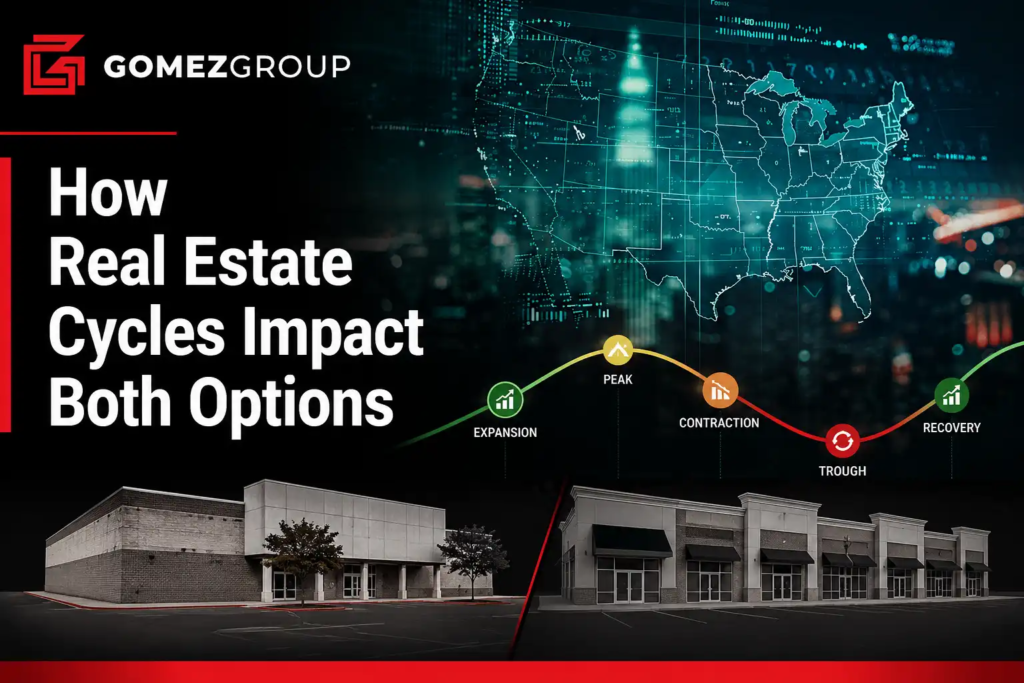
Economic shifts hit single-tenant and multi-tenant properties differently based on who your tenants are and how long their leases last.
Single-tenant locations backed by grocery or essential services usually stay stable through economic ups and downs. Multi-tenant centers let you adjust your tenant mix quicker as local shopping habits and business needs shift.
Financing and Lender Requirements
Banks look at single-tenant and multi-tenant deals through slightly different lenses when you apply for a loan.
- Single-Tenant Approval: Lenders focus heavily on your tenant’s credit health, business stability, and lease length.
- Multi-Tenant Approval: Lenders look closer at building occupancy history, neighborhood demand, and total overall cash flow.
Which Option Fits Your Investment Strategy?
If your main goal is long-term cash flow with almost zero daily management, a single-tenant property is usually your best bet.
If you want to actively add value, build equity faster, and spread your risk across multiple companies, a multi tenant net lease structure makes more sense.
Operational Considerations to Keep in Mind
Before making an offer, think about how the day-to-day demands line up with your current setup.
Operational Insight: Multi-tenant properties almost always require a local property management team for shared areas, while single-tenant buildings let tenants work directly with service vendors.
- Property Oversight: Multi-tenant spaces usually require third-party property managers to run smoothly.
- Capital Expense Budgeting: Planning for major roof, pavement, and structural needs helps you avoid surprise repair costs.
- Market Liquidity: How fast you can resell depends on local demand for passive income versus hands-on value-add deals.
Scaling Your Commercial Real Estate Portfolio
Building a strong commercial portfolio often means mixing both property types as your goals change over time.
A lot of investors buy a multi tenant property early on to build up equity through hands-on management. Later, when they want to protect their wealth and work less, they move those funds into lower-maintenance assets using tax-deferred exchanges.
Digital Systems in Modern Net Lease Assets
Modern commercial buildings use simple software tools to keep operations organized and keep overhead under control.
Using clear software makes tracking leases, organizing records, and handling routine repair requests straightforward across all units.
Larger commercial properties sometimes run a multi tenant architecture software platform to easily handle utility metering, keycard access, and tenant maintenance tickets in one place.
How to Make the Final Decision?
Picking the right format comes down to weighing your personal goals against how much landlord work you want to do.
Looking closely at local market demand, tenant business health, and lease terms ensures your choice supports your bigger financial picture.
Comparing multi tenant vs single tenant properties helps you pick an asset type that fits your comfort level and cash flow goals. At Gomez Group, our team gives you clear, practical advice to help you acquire commercial properties that build lasting value.
Frequently Asked Questions
Q1. What is the main difference between single-tenant and multi-tenant leases?
A single-tenant property has one business renting the whole building, while a multi-tenant property splits space among several different businesses.
Q2. Are single-tenant NNN properties completely passive?
Yes, most single-tenant NNN properties require very little work from you because the tenant pays for taxes, insurance, and repairs directly.
Q3. Which property type generally offers higher rental yields?
Multi-tenant properties often offer higher cap rates because you take on more management work and oversee multiple tenants.
Q4. What happens when a single-tenant building becomes vacant?
If your single tenant moves out, your property income stops completely until you find a new one, which is why checking tenant credit is so important.
Q5. How can Gomez Group help me choose the right net lease investment?
Gomez Group looks at your investment goals, timeline, and comfort with risk to help you find the best net lease properties for your portfolio.