
The retail narrative has changed. For years, the "safe" money chased single-tenant net lease (STNL) drugstores and big-box anchors. Investors accepted compressed cap rates for the perceived safety of a corporate guarantee.
In 2026, that safety is in question. Major pharmacy chains are shuttering thousands of locations. Big-box consolidation has left landlords with massive, difficult-to-fill vacancies. This volatility has triggered a capital shift.
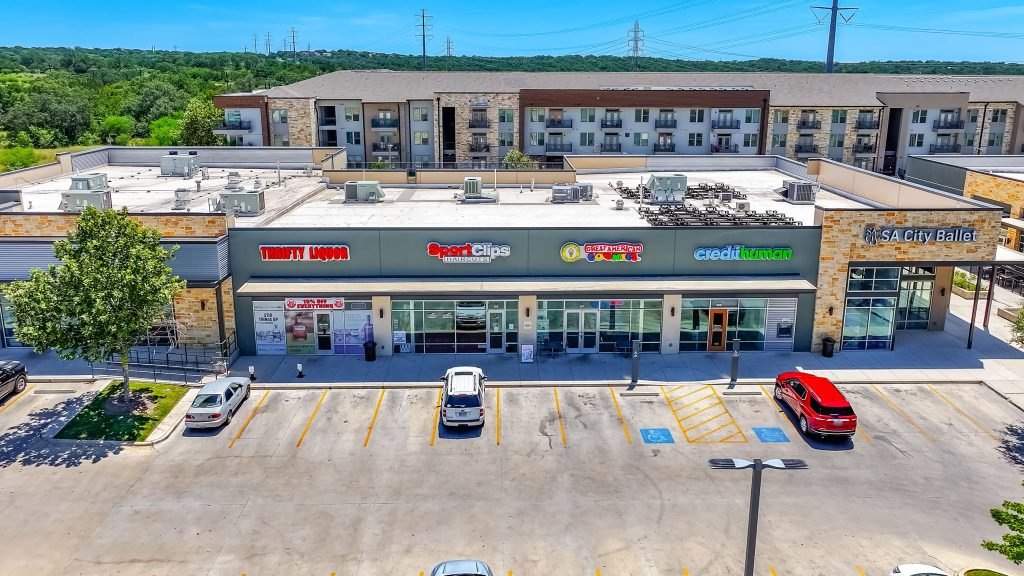
Smart money is moving down the size scale. Small format retail trends indicate a massive "Flight to Yield" toward neighborhood strip centers and unanchored retail assets. These properties offer diversification, internet resistance, and higher cash-on-cash returns.
In This Analysis
The Shift: From Big Box Volatility to Small Shop Stability
The old rule of retail investment was "Bigger is Better." An anchor tenant like a grocery store or pharmacy was the gold standard. Today, the market views risk differently.
The Binary Risk Problem
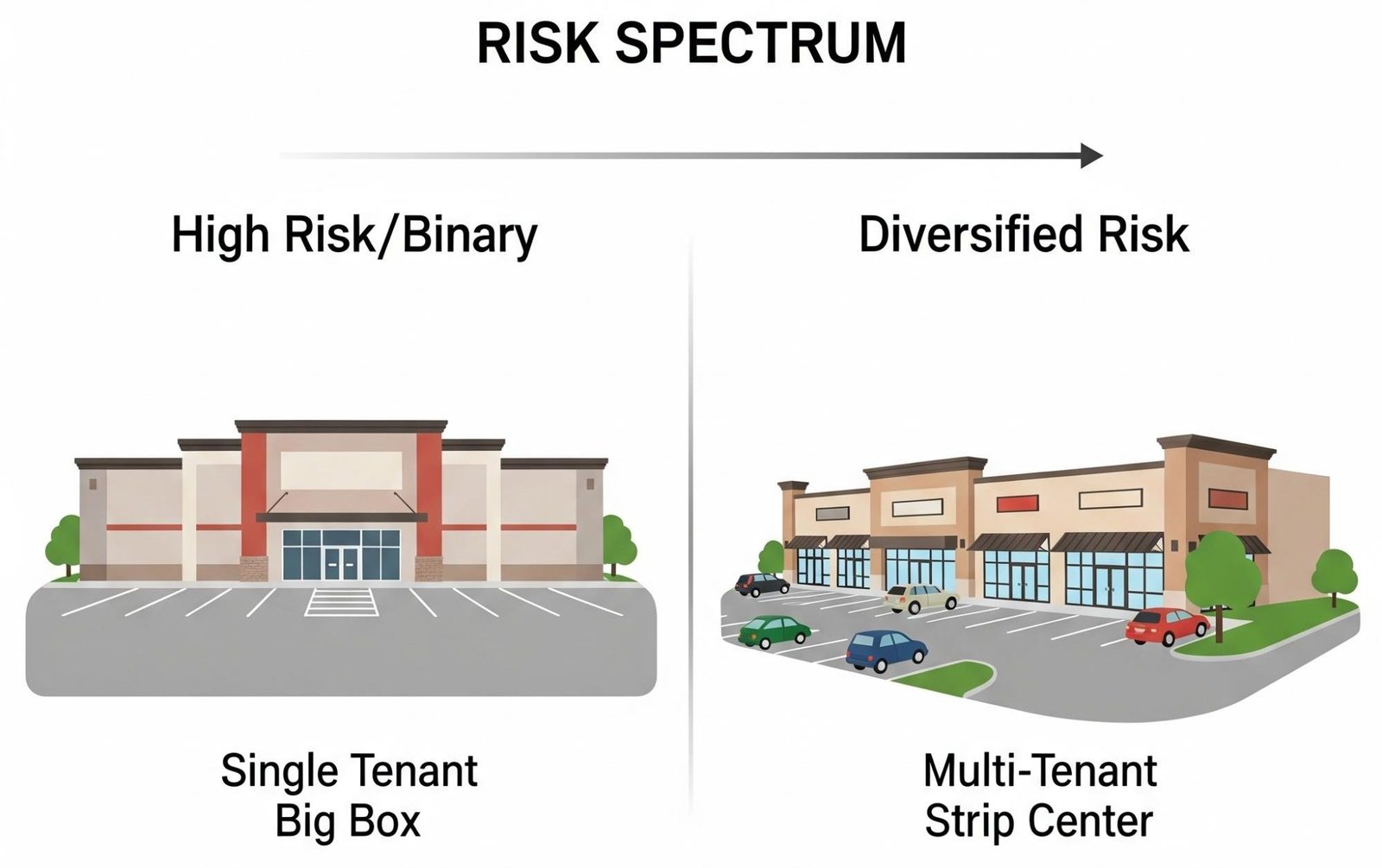
Single-tenant assets have binary risk. If your tenant stays, you have 100% occupancy. If they leave, you have 0% occupancy and a dark building. The recent wave of corporate restructuring in the pharmacy sector exposed this vulnerability.
️ The Safety of Diversification
Small format centers spread the risk. A 10,000 SF strip center might have five tenants. If one tenant leaves, you retain 80% of your income. You can service your debt while you re-lease the space. This granular income stream is attractive in a volatile cycle.
Why "Unanchored" Strips Are Seeing Cap Rate Compression
Historically, unanchored strip centers traded at a discount. In 2026, the spread is narrowing.
The Yield Chase
Core assets like Grocery Anchored Shopping Centers still trade at aggressive cap rates. Unanchored strips offer a spread of 100 to 150 basis points over grocery-anchored product.
The Supply Constraint
Developers stopped building small unanchored strips a decade ago. Construction costs made small projects unfeasible. This lack of new supply has driven occupancy rates to historic highs.
"Five years ago, institutional capital ignored unanchored strips. Today, we are seeing private equity funds aggregate these assets. They realized that a portfolio of 20 neighborhood strips offers better risk-adjusted returns than a single Class A office tower." – Gomez Group
The "MedTail" Factor: Credit Quality in Small Spaces
The "MedTail" (Medical Retail) trend is a primary driver of value. Healthcare providers are moving out of office buildings and into retail strips to be closer to patients.
Why Investors Love MedTail
- High Build-Out Costs: A dental office requires expensive plumbing and electrical work. Once a tenant spends $150 PSF on a build-out, they rarely leave.
- Recession Resistance: Healthcare is non-discretionary. Patients need treatment regardless of the economy.
- Creditworthiness: Many MedTail operators are backed by private equity or large hospital systems, providing strong credit enhancement.
The Service Economy Defense
Retail is bifurcated into "Goods" vs. "Services." Small format retail trends overwhelmingly favor service tenants. For an investor, a center filled with service tenants is an "Internet-Proof" asset.
You can see examples of high-performing service tenants on our Quick Service Restaurants page.
📋 The Ideal Tenant Mix Checklist
The Value-Add Opportunity
For buyers, small format centers offer multiple levers to force appreciation. Unlike a NNN lease with flat rent for 20 years, multi-tenant assets allow for active management.
- Mark-to-Market Opportunities Acquire assets from "mom and pop" landlords and bring rents up to market rates as leases roll over.
- Lease Restructuring Convert old Gross leases into Triple Net (NNN) Leases. This transfers insurance risk to tenants, increasing valuation.
- WALT Management Strategically stagger lease expirations to create a "laddered" rent roll, de-risking the asset for future sale.
Common Questions
What is small format retail?
Generally spaces under 5,000 SF, focusing on convenience and service-oriented tenants rather than big-box anchors.
Are strip malls a good investment in 2026?
Yes. Neighborhood centers are outperforming malls and office assets due to high occupancy and recession-resistant tenants.
What is the difference between anchored and unanchored retail?
Anchored centers have a major draw (grocer/target). Unanchored centers consist only of small shops. Unanchored assets often offer higher yields.
Evaluating Your Portfolio for 2026
The market has spoken. Capital is moving away from binary risk and toward diversified, service-based income streams. Many investors are using the 1031 Exchange to rotate capital out of older, high-risk assets and into stabilized neighborhood centers.